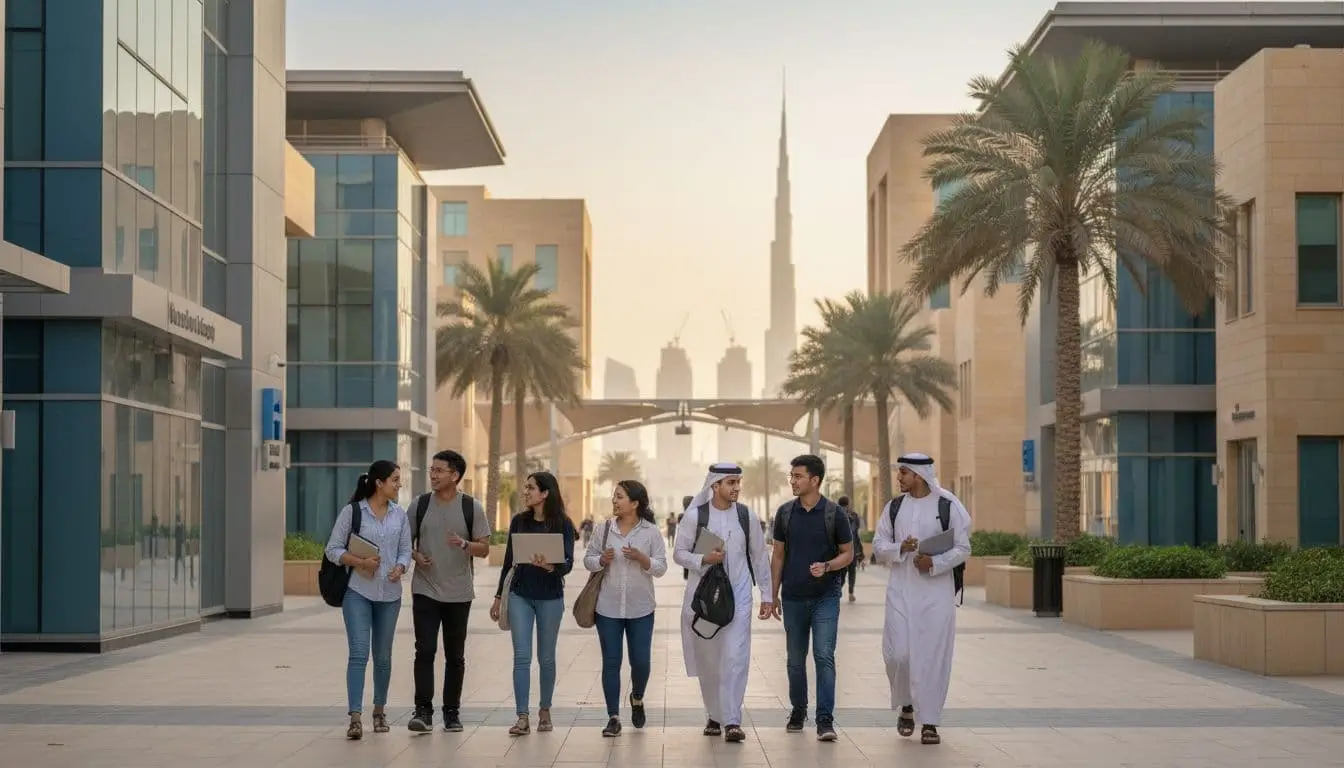
Dubai’s Education Hub Levels Up as Student Numbers Rise in Academic City and Knowledge Park
What does a busy campus corridor tell us about the wider economy? Quite a lot, actually. Reports this academic year say student numbers at Dubai International Academic City and Dubai Knowledge Park are up 15% year on year, now above 38,500 for 2024 to 2025.
For SME owners and working professionals in Dubai and Abu Dhabi, this matters because education growth feeds a stronger talent pipeline, steadier demand for everyday services, and a clear signal that Dubai is doubling down on skills.
What the 15% student surge means for Dubai’s education economy
In plain terms, more students means more spending, more jobs, and more partnerships between education providers and local firms. Dubai International Academic City and Dubai Knowledge Park sit at the centre of that activity, bringing together universities, training providers, and professional education under one umbrella.
These districts serve a truly international student base, and they aren’t limited to full-time degrees. Alongside undergraduate programmes, there are postgraduate routes, vocational pathways, and short courses aimed at working adults who want new skills without leaving the UAE.
Over time, that mix does something important for the local economy. It keeps people learning, helps employers hire locally, and encourages new specialisms in areas like business services, health, and technology.
The numbers at a glance, Academic City and Knowledge Park in 2024 to 2025
The combined figure being cited is 38,500+ students, with reported growth of 15% year on year. That answers the main voice-search question, “How many students are in Academic City and Knowledge Park?”
It also sits alongside a bigger benchmark. Dubai’s private higher education enrolment reached 42,026 in 2024 to 2025, up 20% (as recorded in sector reporting tied to KHDA open data).
Why Dubai is attracting more students and more campuses
Several factors explain the pull:
- Wider course choice, including tech, business, health, and creative subjects.
- International branch campuses, which let students earn global degrees in Dubai.
- Clearer relocation routes, with student visa options supporting longer stays.
- Safety and connectivity, with Dubai positioned as a travel hub for families.
For more context on longer-term enrolment expectations, we can refer to the education hubs’ own updates, including DIAC’s release on projected growth by 2030: DIAC and DKP enrolment outlook.
Opportunities for UAE businesses, more students mean more local demand
When student communities grow, the surrounding “support economy” grows with them. That includes basics (food, transport, printing) and higher-value services (IT support, clinics, tutoring, and accommodation support). If we run a business in Dubai Silicon Oasis, Al Barsha, Motor City, or nearby communities, it’s a reminder to keep our offer clear and easy to find.
There’s also a B2B angle. Universities and training centres buy services like event production, branded merchandise, catering, facilities support, and short-term staffing. Even small suppliers can win repeat work if they’re responsive and compliant.
A good example of how institutions track growth is the way universities reference KHDA reporting in their own updates, such as MDX Dubai’s KHDA Open Data coverage.
High-demand services around Academic City and Knowledge Park
- Student housing support services (maintenance, cleaning, move-in support)
- Food and drink, plus last-mile delivery
- Mobility (car rentals, repairs, tyres, battery checks)
- Health and wellbeing (clinics, physio, gyms, barbershops)
- Study support (tutoring, laptop repair, printing, stationery)
- Events (graduations, career fairs, student societies)
How this supports Dubai’s long-term plans for skills, jobs, and innovation
A larger student base supports Dubai’s direction of travel, building future skills and keeping talent closer to employers. For local companies, the knock-on effect is practical: a deeper pool of graduates for entry-level roles, and more professionals re-skilling through part-time study.
We also tend to see more student-led projects and small start-ups linked to campus incubators. For employers, that can mean fresh ideas and a steady stream of interns and junior hires, especially in tech, business services, healthcare, and the creative economy.
Conclusion
A reported 15% rise to 38,500+ students in Dubai International Academic City and Dubai Knowledge Park is more than a headline. It’s a steady sign that Dubai’s knowledge economy is expanding, and it creates real demand for local services and supplier partnerships.
If we want to capture that demand, visibility matters. Add your business for free so students and institutions can find you: https://uaethrive.com/get-your-uae-business-discovered-for-free