UAE Market Insights for today’s shifts
Track practical signals that affect demand, staffing, and customer behaviour across the Emirates. Use these insights to plan around weather disruption, travel peaks, and sector changes.


Heavy rain has a way of turning a normal working day into a moving puzzle. UAE news today (18 December 2025) is dominated by severe weather across several Emirates, with real knock-on effects for commutes, staffing, deliveries, and customer footfall.
Listen to our audio summary above for key insights from UAE News Today — Top Stories & Updates | 19 December 2025.
In this round-up, we’re keeping it practical. We’ll cover what changed today, what we can do to reduce disruption, and where the pressure points are likely to sit over the next few days. We’re also looking beyond the storms, with updates that matter for SMEs and investors across Dubai, Abu Dhabi, Sharjah, Fujairah, and Ras Al Khaimah, including trade links, HR changes, property signals, and major public events.
If we treat today like a business continuity drill, we’ll be better placed for the next one.
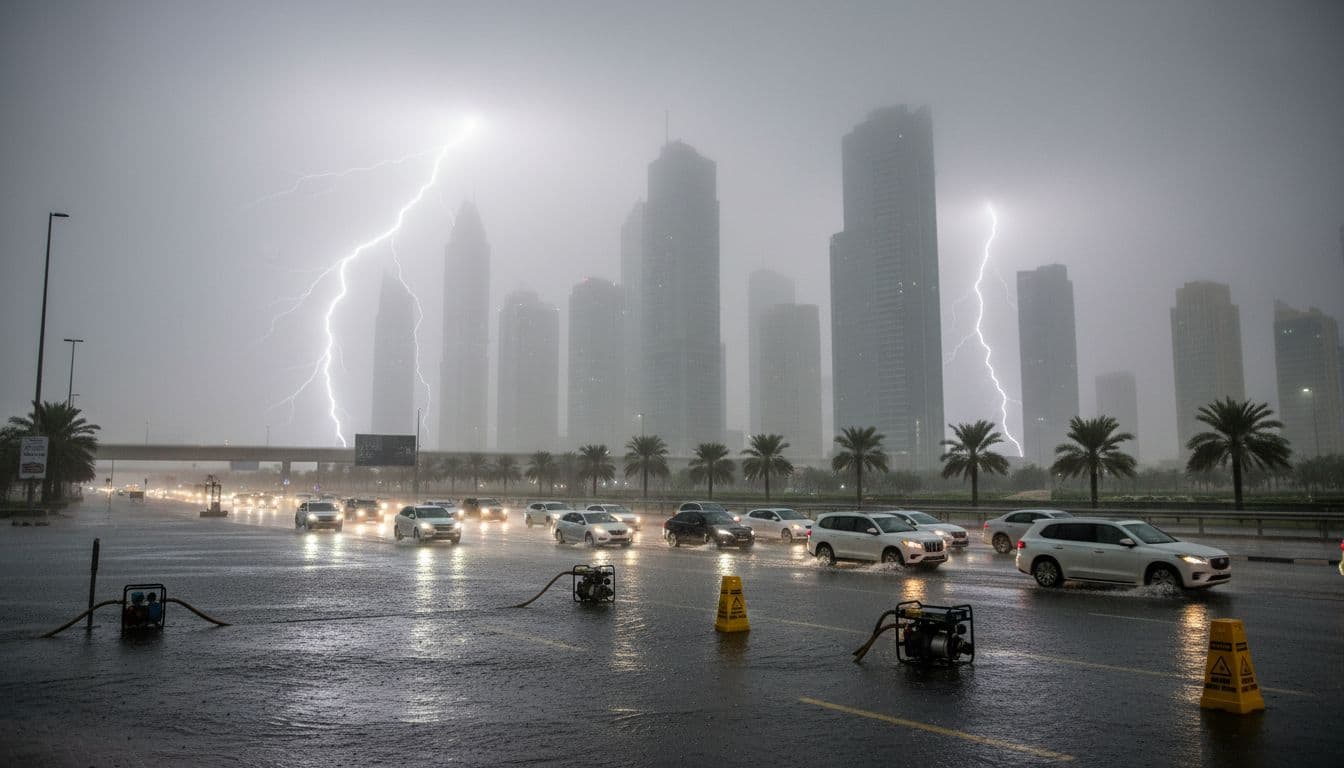 Waterlogging on a busy Dubai street during heavy rain, created with AI.
Across 18 December 2025, severe rain and thunderstorms affected day-to-day movement in multiple Emirates, and the impact wasn’t evenly spread. Some areas saw water pooling quickly, while others experienced short, intense bursts that still slowed roads and reduced visibility.
For planning purposes, it helps to separate weather news into two business questions:
Official forecast tools are the quickest way to make that call before the school run or a delivery round begins. We’re checking the National Centre of Meteorology’s live forecast maps and warnings, then matching that to where our teams and customers actually are. This page is a useful reference for real-time conditions and forecast changes: National Centre of Meteorology weather forecast maps.
For SMEs, the most common cost today isn’t “lost sales” in the abstract. It’s small leaks in the schedule: a courier that arrives 90 minutes late, a site visit that slips by a day, a team member who can’t safely cross the city, or a customer who turns around when parking is flooded.
A simple rule helps: if the weather slows down movement, we should speed up communication. That means confirming appointments early, offering remote options, and updating delivery windows before customers have to chase us.
Waterlogging across parts of Dubai and Sharjah meant slower traffic and uneven road access today. Even when a route isn’t closed, standing water changes driving behaviour. Braking distances increase, visibility drops, and minor incidents cause long tailbacks.
Dubai Municipality has confirmed its teams are working around the clock to manage waterlogging and keep traffic moving. The details matter because they explain why some areas reopen faster than others. The municipality highlighted a 24/7 response, storm-drain readiness work, around 60 km of pumping lines, and the use of temporary runoff storage (temporary “lakes”) to hold excess water while systems catch up.
For business owners, this is more than a headline. Faster drainage and pumping means:
What can we do on our side, especially if we run a shop, clinic, café, garage, salon, or any service business with appointments?
Route planning: We should set a cut-off time each morning for route decisions (for example, before the first delivery slot), then stick to one plan rather than changing drivers mid-route. It reduces confusion and missed drops.
Customer messaging: A short WhatsApp or SMS broadcast works better than individual replies. Keep it simple: revised hours, reschedule options, and the safest parking or entrance.
Flexible hours: If footfall is likely to dip at peak rain times, we can shift staff start times, extend later, or concentrate appointments into clearer weather windows. Even a one-hour adjustment can protect productivity.
On-site safety checks: If we have a premises team, we should check drains, entrances, and any low points in car parks. Water finds weak spots quickly.
In Abu Dhabi, temporary closures of parks and beaches were reported as a safety measure during severe weather. This is the kind of change that affects families planning their day, and it also hits operators who depend on outdoor movement: cafés by promenades, outdoor retail kiosks, tour providers, and sports activities.
For operators, the key is recognising that a closure doesn’t just reduce customers, it also changes where people go instead. When outdoor plans are cancelled, demand often shifts towards indoor malls, home delivery, and local neighbourhood services.
If we employ outdoor teams (construction support, cleaning crews, landscaping, couriers, mobile car wash), today is a reminder to keep site safety decisions clear and documented. We can follow the spirit of official safety advice without turning it into paperwork:
Pause high-risk tasks: Stop work at height, exposed scaffolding, or tasks near pooled water where slips are likely.
Confirm shelter plans: Every team should know the nearest safe indoor area, and who makes the call to stop.
Check site access: If access roads are waterlogged, a site may be “open” in theory but unsafe in practice. It’s better to reschedule than to lose hours in stuck vehicles.
Communicate expectations: Staff should hear one consistent message. Safety first, updates by a set time, and no pressure to take unsafe routes.
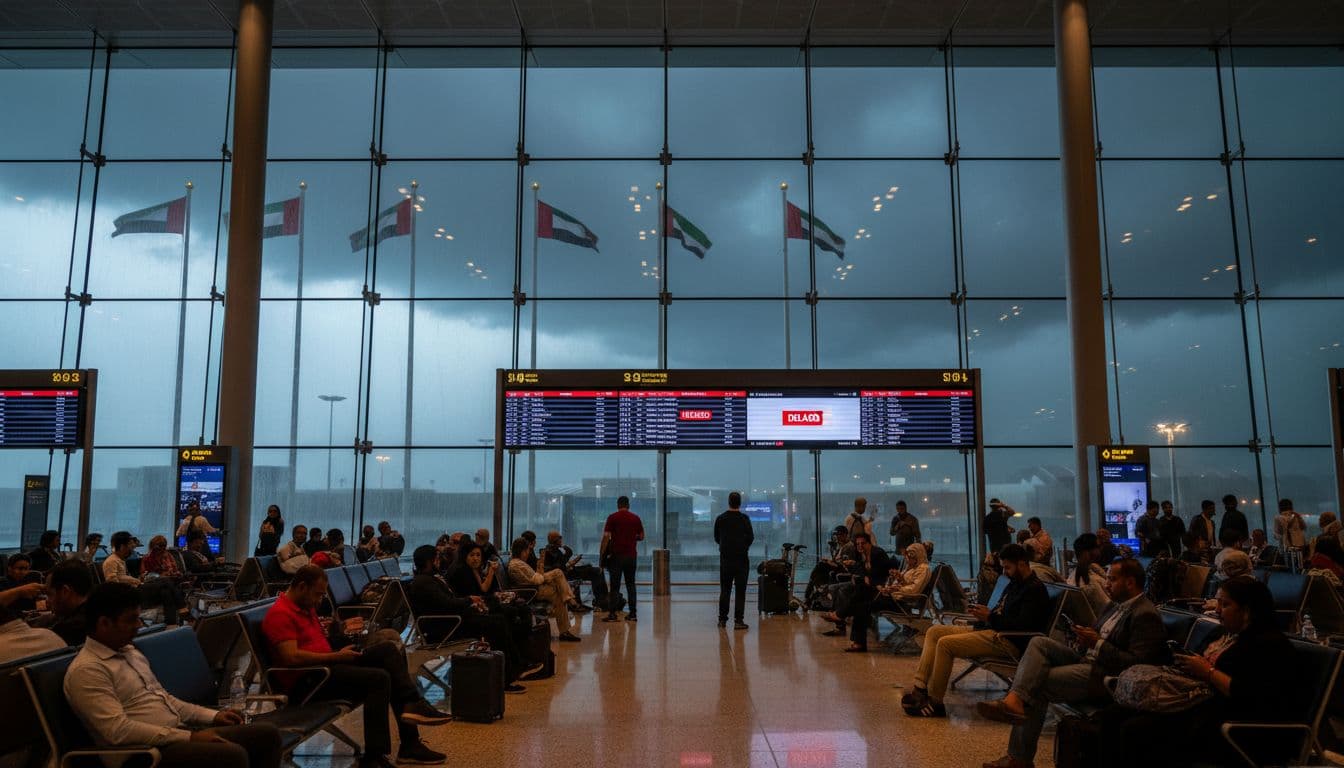 An airport terminal scene during stormy weather disruption, created with AI.
Today’s travel picture is best read as “higher friction” across the network. Storms don’t only delay flights, they slow ground handling, extend queue times, and make road journeys harder to predict.
For businesses, we’re treating travel disruption like we would a supply delay. We can’t control it, but we can reduce the cost of it.
Here’s what we’re checking before any meeting, delivery, or staff movement:
One more practical point: when rain is heavy, commuter routines change. Even small convenience options can disappear. Reports of closures affecting some convenience stores inside Dubai Metro stations matter because they reduce quick top-ups and “grab-and-go” options. For nearby retailers, that can mean opportunity, but only if we’re open when the commuter wave arrives and we promote a clear, quick offer.
Storm conditions can trigger delays, diversions, and cancellations, especially when runway operations and aircraft turnarounds slow down. Today’s updates included flight disruption in Dubai, plus a note that Kuwait Airways cancelled two Kuwait to Dubai flights due to unstable weather, with passengers to be updated on rescheduled timings.
If we travel for work, or we move time-sensitive cargo tied to flights, a short checklist helps:
Confirm status directly: Check the airline’s live flight status before leaving, and keep screenshots for reference.
Add buffer time: If we have a client meeting within a few hours of landing, we should reschedule early rather than risk a no-show.
Keep receipts and rebooking info: Save transport receipts and rebooking messages. It speeds up expense claims and insurance steps.
Re-plan the last mile: A flight arriving “only 40 minutes late” can still mean a two-hour road trip if key roads are slow. We should brief drivers and adjust pickup times.
Abu Dhabi has a clear road planning item coming up: Sheikha Fatima bint Mubarak Street is temporarily closed from 19 December to 22 December. If our business depends on cross-city movement, that’s enough notice to protect service levels.
Simple steps that work:
Shift delivery slots: Move non-urgent drops away from peak hours. Offer customers a slightly wider window rather than a narrow promise you can’t keep.
Update customer messages: A single line in booking confirmations helps: “Some routes may take longer due to temporary closures, we’ll confirm ETA on the day.”
Brief drivers: Make sure drivers know the closure dates, and that they shouldn’t attempt “shortcuts” through unfamiliar streets in heavy rain conditions.
Parkin has rolled out paid parking in another Dubai neighbourhood, with Wasl Green Park listed as Zone 614W. Operating hours were reported as daily from 8am to 10pm, with hourly tariffs and subscription pricing available.
For nearby shops, clinics, cafés, and service businesses, parking changes can feel small until they change behaviour. People still visit, but they plan more. They may shorten stays, choose different times, or park further away.
What we can do quickly:
Share clear parking guidance: Add a short note to Google Maps Q&A, Instagram highlights, or WhatsApp confirmations: zone number, paid hours, and best drop-off points.
Adjust staff parking plans: If staff usually park nearby all day, subscriptions or alternative parking may be cheaper than daily hourly payments.
Plan for short visits: Encourage quick pickups, click-and-collect, or 20-minute appointment slots during busy hours, then push longer sessions to quieter periods.
If we want to be found by customers searching “near me” while they’re already in the area, it also helps to keep our business details accurate and easy to reach. We can review competitors and nearby services inside the UAEThrive business directory listings to see what customers are likely comparing.
 A trade-focused business meeting scene, created with AI.
Once we look past the rain, today’s business headlines still give us signals for 2026 planning. We’ve pulled out the updates that are most likely to affect SME demand, hiring expectations, and market timing.
RAKEZ signed an MoU with the Russia-UAE Business Council to support two-way trade and help companies expand, with a focus on non-oil goods and services. Coverage also noted a sizeable Russian business presence in RAKEZ (around 1,000 companies) and a reported trade ambition that could exceed $10bn by the end of 2025.
For SMEs, the useful question is: where do smaller firms plug in?
A quick caution that protects cash flow: when trade interest rises fast, so do rushed deals. We should tighten basics, confirm counterparties, keep contracts clear, and avoid “urgent” payment terms that don’t match delivery reality.
Fujairah announced amendments to its government human resources law, with changes intended to protect job grades, allowances, and benefits. Updates linked to salary increases are set to take effect on 1 January 2026.
Even if we’re in the private sector, government HR moves matter because they influence the local talent market. They shape expectations around progression, allowances, and retention. For business owners, this is a reminder to:
We don’t need to mirror government structures, but we should be aware of how they affect hiring conversations in Fujairah and the wider Northern Emirates.
Expert commentary on Dubai’s 2026 real estate trends points to a market that is maturing, with performance varying by segment. Villas and townhouses were described as tight, while some apartment segments may stabilise as supply increases. At the same time, data shared via the market pointed to residents staying longer on average (reported as over a decade), and more people putting down roots rather than treating Dubai as a short stop.
For SMEs, this matters in plain ways:
We’re also seeing property innovation stories, such as a climate-responsive residential development announced for Yas Island, with design choices like passive cooling features and EV-ready parking capacity. For suppliers, this supports demand in EV charging services, building materials, MEP, and property maintenance, without needing any guesswork on prices.
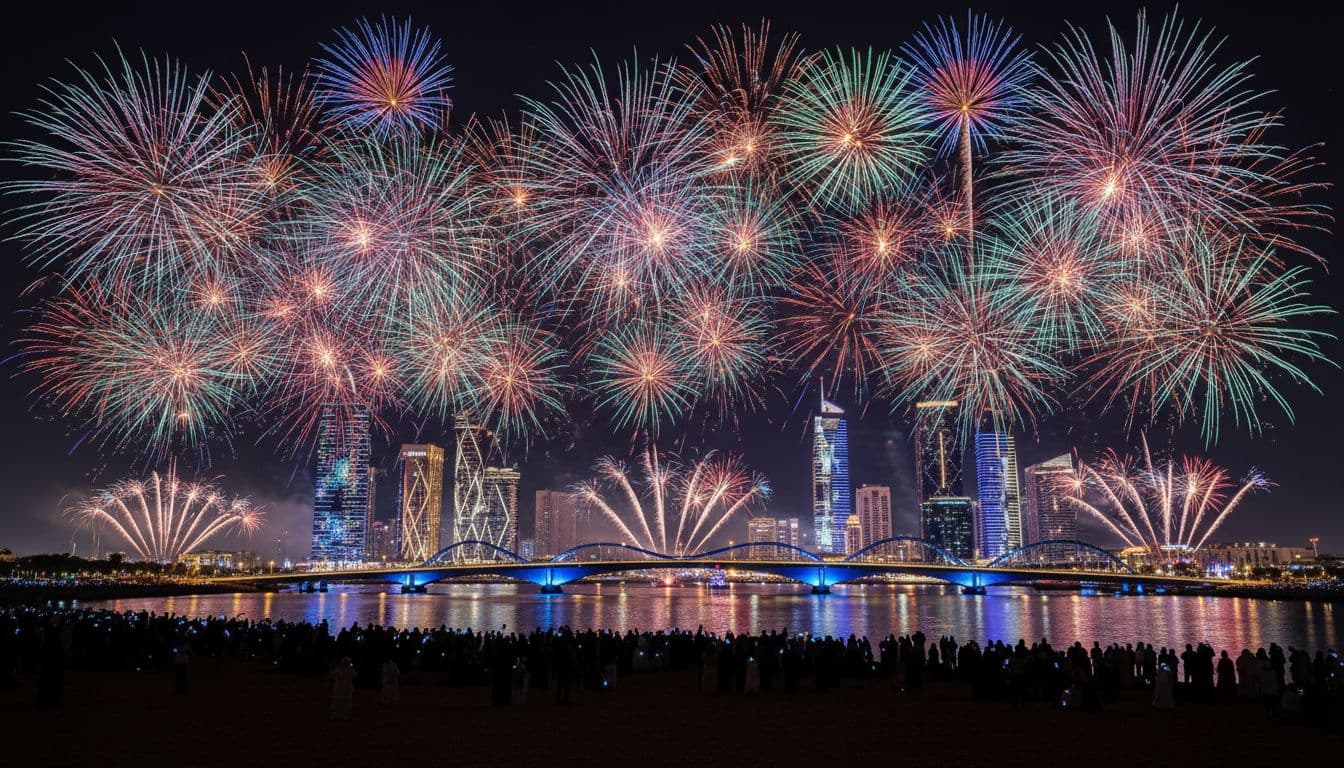 Fireworks over a waterfront in Sharjah, created with AI.
Sharjah’s New Year’s Eve 2026 plans are spread across multiple destinations, including 10-minute fireworks shows at Al Majaz Waterfront, Al Heera Beach, and Khorfakkan Beach, plus paid options such as an Al Noor Island dinner and stargazing, and an overnight desert experience in Mleiha. For Sharjah destination context and broader activity planning, Shurooq is a useful official reference point: Sharjah Investment and Development Authority (Shurooq).
Abu Dhabi’s public art programme also continues to expand, with Abu Dhabi Canvas reported to have placed 400+ artworks across 130 locations. This kind of citywide art can lift footfall in quieter pockets, which benefits cafés, convenience retail, local services, and neighbourhood destinations.
For hospitality, transport, and retail operators, we can prepare now:
Staffing: If we expect spikes around fireworks timings, we plan shifts around arrivals and exits, not just the “main event”.
Offers: A simple, time-bound offer works best (hot drinks, takeaway bundles, family packs), especially if weather remains unsettled.
Transport messaging: Share the best drop-off points and expected congestion windows. Customers forgive traffic, but they hate uncertainty.
Sharjah’s Desert Theatre Festival also concluded its ninth edition, which is a reminder that cultural calendars drive real trade for hotels, restaurants, and local transport. Fujairah’s upcoming taekwondo governance and competition week (late January to early February 2026) is another date worth noting for sports tourism suppliers, from printing and staging to shuttles and catering.
For ongoing planning like this, we’re keeping our updates and practical guides together on the UAEThrive business blog.
Today’s theme is clear: severe weather remains the biggest operational risk in the short term, and the fastest wins come from safer routing, clear customer messaging, and realistic scheduling. Transport disruption is manageable when we check flight status early, build buffers, and brief drivers properly. Beyond the rain, the RAKEZ trade partnership story, Fujairah’s HR changes effective 1 January 2026, and maturing property trends all give us planning signals for 2026, while Sharjah’s New Year’s Eve plans and Abu Dhabi’s public art programme point to where seasonal demand will gather.
Want more local visibility when customers search nearby? Add your company today: Get your UAE business discovered for free.
Track practical signals that affect demand, staffing, and customer behaviour across the Emirates. Use these insights to plan around weather disruption, travel peaks, and sector changes.
When customers search near them, your business details need to be accurate and easy to contact. Add your listing in minutes and start building consistent local visibility.
Stormy weeks and seasonal travel can change buying patterns fast, so visibility matters. Upgrade to premium placement to help high-intent customers choose you first.
If weather, travel delays, or route changes are affecting sales, we can help you adjust your plan. Get clear next steps for local SEO, listings, and lead flow in the UAE.