Daily headlines can feel like standing at a busy junction, with signals coming from every direction. On 9 December 2025, we see a clear pattern across the Emirates that matters for anyone running or planning a business in the UAE.
Listen to our audio summary above for key insights from UAE News Today — Top Stories & Updates | 09 December 2025.
Today’s round-up focuses on mobility, tourism, finance, the creator economy, and safety. We look at how new speed rules, shared taxis, and future transport projects could reshape commutes and customer flows. We highlight clean energy and tourism plans in Hatta, Abu Dhabi’s new finance cluster, and agriculture skills in Sharjah that feed into long-term food security and trade.
On the culture side, we track festivals in Sharjah and Dubai, Ramadan 2026 tourism plans, and lessons from BRIDGE Summit 2025 on creators and brand storytelling. We also cover safety and community updates that affect daily life and business continuity.
Every story we include is based on official or reputable sources published on or around 9 December 2025. Our goal is simple: give UAE-based SME owners, professionals, and investors a clear daily brief they can use to plan location, staffing, and marketing with confidence.
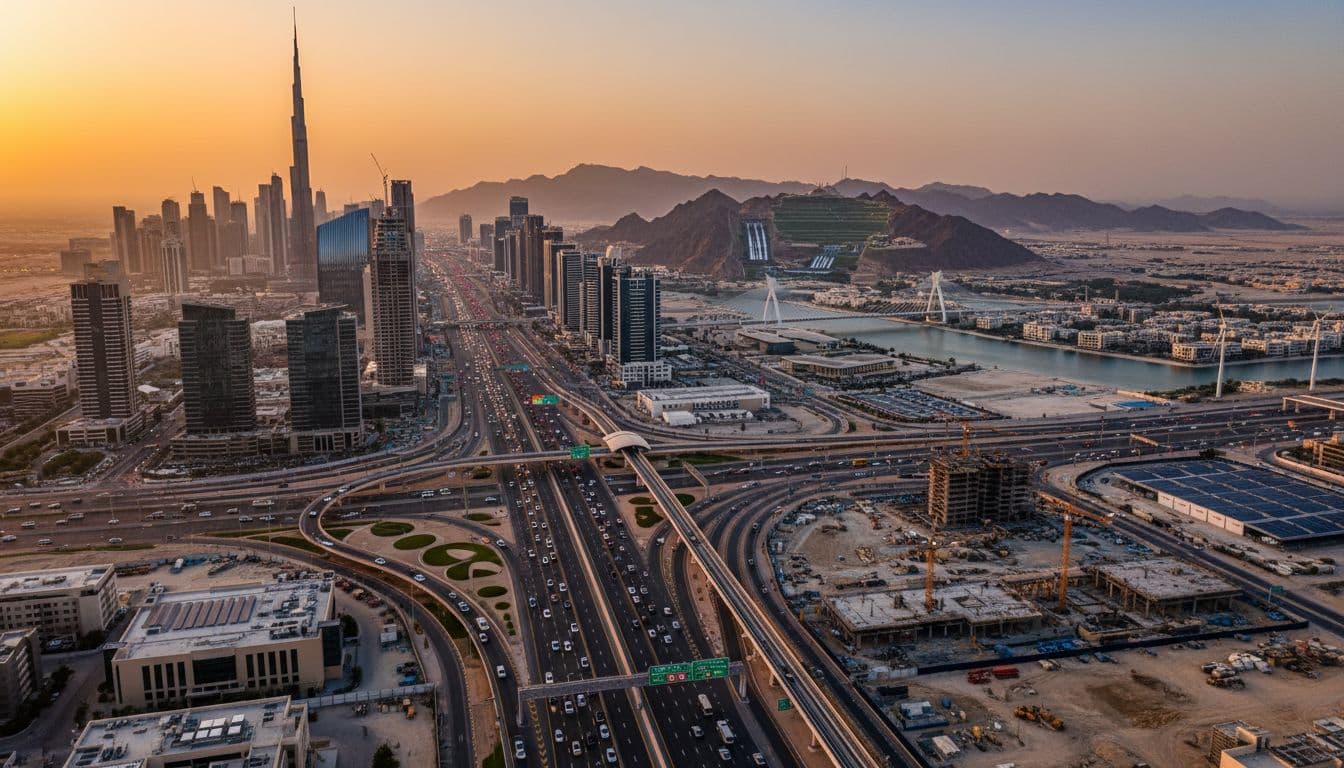
Modern UAE cityscape with busy highways and mountain projects, image created with AI
Top UAE Headlines Today (9 December 2025): What Matters For Business
For a quick scan, these are the stories that stand out today for UAE business owners and decision-makers:
Transport and speed rules: New speed limit updates across key roads, variable limits in Abu Dhabi, smart limiters in Ajman taxis, and new rules for delivery bikes in Dubai. These changes affect commuting time, delivery schedules, and fleet compliance.
Shared taxis and future mobility: Dubai’s Roads and Transport Authority (RTA) is expanding its shared taxi trial after strong demand on the Dubai–Abu Dhabi route, and is testing airport and event routes. At the same time, the UAE is planning a fourth national highway, aerial taxi networks, and Dubai Metro’s Blue Line, which will shift how staff and customers move between Emirates.
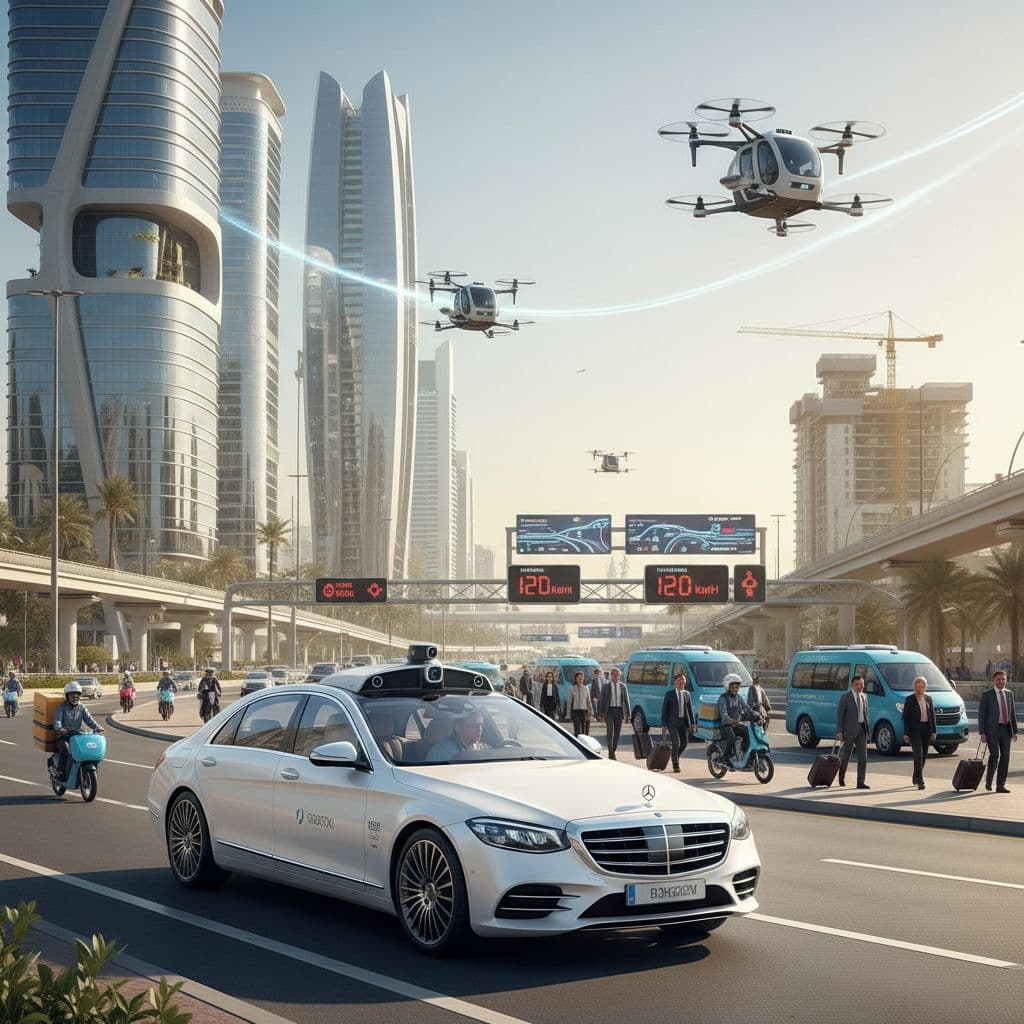
Autonomous and luxury robotaxis: Abu Dhabi is preparing a high-end robotaxi service using Mercedes-Benz S-Class cars with advanced self-driving features, while Dubai reviews its own autonomous taxi and aerial taxi plans. This sets the stage for premium, tech-driven business and tourism travel.
Road safety and bike-use rules: Sharjah Municipal Council is reviewing rules for bicycles, e-bikes, and motorbikes, with a strong focus on safety and sustainable mobility. This matters for delivery platforms, last-mile logistics, and family-friendly communities.
Investment and sustainability: Abu Dhabi’s new FIDA finance cluster targets billions in GDP and investment by 2045, while DEWA’s sustainable projects in Hatta link clean energy with eco-tourism. Sharjah is building agriculture skills and regional trade links with a visiting Kurdistan delegation.
Culture, tourism, and creators: Jazz at Al Noor Island in Sharjah, Sole DXB in Dubai, Ramadan 2026 tourism plans, and BRIDGE Summit 2025 in Abu Dhabi all show how culture and the creator economy are shaping tourism, hospitality, and brand-building strategies.
Transport & Mobility Updates Across the UAE
Future-focused transport with robotaxis, shared taxis and new routes, image created with AI
Mobility is the thread that connects staff, customers, and suppliers. On 9 December 2025, transport news across Dubai, Abu Dhabi, Sharjah and other Emirates points to a future with smarter roads, more shared rides, and new premium options.
For SMEs, this is not an abstract policy shift. New routes, rules, and transport modes influence where we open branches, how we plan shifts, and which locations feel attractive for both employees and clients. A 20‑minute cut in travel time can be the difference between a site that works and a site that struggles.
New Speed Limit Rules: What UAE Drivers Need To Know
Recent speed changes across the UAE are designed to improve safety while keeping traffic flowing.
In Abu Dhabi, some roads now have variable speed limits that adjust in real time using smart signs linked to traffic and weather data. On selected routes, speed limits have been brought down to reduce accidents, and the minimum speed on parts of E311 has been removed to give drivers more flexibility.
Ajman taxis are being fitted with smart speed limiters, which automatically prevent drivers from exceeding posted limits. In Dubai, new lane rules guide where delivery bikes can ride, and truck restrictions on some corridors are helping private cars keep a steadier pace.
For daily drivers, riders, and fleet operators, the message is clear. We have to watch new signs, train drivers carefully, and review internal policies. HR teams that arrange staff transport or offer car allowances may also need to update handbooks and induction materials. Safer driving can help reduce downtime and, over time, may influence insurance costs and claims records, although we do not offer legal or insurance advice.
Shared Taxi & Future Transport Projects Between Emirates
RTA’s shared taxi pilot is gaining real traction. A shared service on the Dubai–Abu Dhabi corridor has seen riders increase by more than two times, so the trial is expanding. New shared routes will connect Al Maktoum International Airport and Dubai World Trade Centre with key areas, offering cheaper options for airport and event travel while reducing reliance on unlicensed transport.
At the same time, federal and local authorities are looking at long-term congestion solutions. Plans include a fourth national highway of around 120 km, aerial taxi routes in Dubai, Abu Dhabi and Ras Al Khaimah, and Dubai Metro’s Blue Line extension, which will add new stations and open up fresh residential and commercial catchment areas.
For businesses, this combination of shared taxis and big infrastructure matters in several ways:
Staff who commute between Emirates could see lower transport costs and shorter journeys.
New office and retail locations along future transport corridors may become more attractive.
Hotels, malls, and event venues close to shared taxi and aerial taxi hubs can expect higher footfall.
Shared mobility also supports safer commuting, since it gives employees an alternative to informal and unlicensed options.
Autonomous & Luxury Robotaxis In Abu Dhabi
Abu Dhabi is preparing a luxury robotaxi service that pairs Mercedes-Benz S-Class vehicles with Level 4 autonomous driving systems from tech partner Momenta, operated by UAE-based company Lumo. These cars are designed to handle most driving tasks on defined routes, with human oversight in the background.
This sits alongside Dubai’s plans for autonomous taxis and aerial taxis under RTA’s long-term strategy. Taken together, they signal a future where premium business travellers and tourists can book smart, driverless rides between key districts, airports, and event hubs.
For companies, this could influence how we design visitor journeys, where we book meeting venues, and which neighbourhoods feel like “prime” locations for clients who expect high-end, tech-led services. Real estate near early robotaxi routes may see extra interest, while mobility and AI firms can explore partnerships as commercial operations start to roll out over the next few years.
Sharjah Road Safety & Bike-Use Rules
Sharjah Municipal Council is reviewing rules on bicycles, e-bikes, and motorbikes to boost safety and promote more sustainable mobility. Discussions cover regulations and awareness campaigns, along with community programmes such as pre‑marriage preparation linked to 2026 as the “Year of the Family”.
For delivery companies and small businesses that use riders, this is more than a formality. Clear rules on helmet use, permitted routes, and safe speeds can help protect staff and reduce disruption from accidents. Families who cycle for leisure also benefit from safer streets and better guidance.
Sharjah’s focus fits into a wider UAE trend, where cities are encouraging greener trips for short distances. Over time, that can support demand for local neighbourhood services, as more people feel comfortable making short journeys by bike instead of car.
For more detail on Sharjah’s review of bike-use rules and community projects, you can read the official coverage from Sharjah24.
New Investment, Sustainability & Sector Growth Stories
While transport shapes how we move, finance, energy, and agriculture shape where capital and talent go next. Today’s business headlines point to Abu Dhabi, Hatta, and Sharjah as areas to watch over the coming decade.
Abu Dhabi FIDA Finance Cluster: New Jobs & Capital Flows
Abu Dhabi is launching a new FIDA finance cluster, which stands for FinTech, Insurance, Digital and Alternative Assets. The targets are ambitious. The cluster is expected to add around USD 15.25 billion (roughly AED 56 billion) to GDP, attract about USD 4.6 billion (around AED 16.9 billion) in investment, and create 8,000 skilled jobs by 2045.
The focus is on fintech start-ups, digital asset platforms, insurance companies, alternative investment managers, and the tech and legal firms that support them. The cluster will also build tailored financial infrastructure for sectors like agri-food, health, and autonomous transport.
For founders and investors, this signals that Abu Dhabi wants to be a major regional base for regulated innovation in financial services. For office landlords, recruitment agencies, and professional services firms, it hints at steady demand for grade‑A space, compliance talent, cyber security, and specialist advisory support in the capital.
DEWA Sustainable Projects In Hatta: Tourism & Clean Energy
Dubai Electricity and Water Authority (DEWA) is turning Hatta into a showcase for clean energy and eco-tourism. Current projects include a pumped-storage hydroelectric power station, large water reservoirs, and the Hatta Sustainable Waterfalls attraction. The station uses water stored at different heights to generate power at peak times, then pumps it back when demand is lower.
DEWA’s update, shared via Dubai Media Office, also highlights Al Rayan Mosque in Hatta, which holds several global LEED records and produces more energy than it uses. That makes it a model for highly efficient, net-positive building design.
Together, these projects create fresh opportunities for hotels, adventure tour operators, F&B outlets, and green technology suppliers. Businesses that specialise in hiking, cycling, kayaking, outdoor dining, and sustainability consulting can all find room to grow as Hatta attracts more visitors. You can see more about the Hatta projects in the official announcement from Dubai Media Office.
Sharjah Agriculture Skills & Regional Trade Links
In Sharjah, the Chamber of Commerce has completed a 60‑hour agriculture workshop programme with Dibba Al Hisn Municipality. The sessions covered modern plant propagation, pruning, pest control, and smart irrigation and fertilisation. The aim is to raise skills in farming and landscaping, support food security, and improve productivity for local producers.
On the same day, a Kurdistan Region delegation visited the Sharjah Chamber and Arbitration Centre to learn about arbitration frameworks and discuss trade cooperation. Stronger links here can help exporters, logistics firms, and law practices that serve clients trading between the UAE and northern Iraq.
These stories may feel niche, but they matter if we work in agritech, landscaping, food supply chains, or regional trade finance. They point to a future where Sharjah plays a larger role in sustainable production and cross-border commerce.
Culture, Tourism & The Creator Economy In The UAE
Jazz at Al Noor Island, Sole DXB street culture, and creator events, image created with AI
Alongside roads and finance, today’s updates also highlight how events and creators shape tourism, hospitality, and marketing.
Sharjah & Dubai Events: Jazz At The Island And Sole DXB
Sharjah’s Al Noor Island is hosting “Jazz at The Island 2025”, featuring artists such as Mayssa Karaa, Las Migas, Ars Nova Napoli, and Ana Carla Maza. The event positions the island as a premium cultural and family destination that blends art, nature, and architecture.
In Dubai, Sole DXB 2025 at Dubai Design District is drawing crowds for three days of music, sneakers, street fashion, sport, and curated food concepts. Headline acts include global names, and the festival has become a key date for youth culture across the region.
What does this mean for SMEs? Hotels, cafes, and restaurants near these venues can plan themed offers, late opening hours, or live screenings. Fashion, beauty, and lifestyle brands can organise pop‑ups and collabs. Creative agencies, photographers, and content studios can build packages for visiting brands that want to stand out during peak festival days.
Ramadan 2026 In Dubai: ‘Business As Usual’ For Tourism
Dubai’s tourism leadership has made it clear that Ramadan 2026 will be a period of active travel and commerce, not a pause. The focus will be on tailored packages for couples and leisure visitors, with shorter booking windows and strong coordination between hotels, attractions, and partners.
For B2C brands, this means we should treat Ramadan as a key trading period, while staying fully respectful of local culture and faith. Hotels and attractions will need clear staffing plans, flexible inventory, and offers that highlight both spiritual and leisure aspects of the city. Marketing teams should prepare content that is thoughtful, modest in tone, and still confident about inviting guests.
At BRIDGE Summit 2025 in Abu Dhabi, the conversation around influence is shifting. Sessions with global figures such as Priyanka Chopra Jonas and Idris Elba, along with creators like para-surf champion Liv Stone, humanitarian storyteller Zachery Dereniowski, and chef Andrew Zimmern, all pointed in the same direction.
Reach is less important than trust. Creators who share real stories, set clear boundaries, protect their mental health, and support their communities are the ones who build staying power. There was also a strong call to use AI and media tools responsibly, to avoid misinformation and to keep narrative control with local voices.
For UAE businesses, this is a direct signal. Working with creators should not be a quick product push. It should be a long-term partnership that supports young talent, aligns with our brand values, and protects reputation. That might mean fewer deals, but deeper ones, where creators help tell the story of our products, our people, and our place in the Emirates.
Safety & Local Community Updates
Safety and community stories may not drive revenue in the short term, but they set the baseline for trust. Today’s key update comes from Abu Dhabi.
Abu Dhabi Reem Island Fire: Official Updates & Business Takeaways
A fire broke out at a building under construction on Al Reem Island in Abu Dhabi. Abu Dhabi Police and Civil Defence teams responded, managed evacuations, and shared updates on the situation. Residents were reminded to follow information released by official channels and to avoid rumours on social media.
For businesses, the direct impact is local and short term, mainly for nearby sites and construction partners. The wider lesson is about preparation. Clear safety procedures, tested evacuation plans, and straightforward communication channels with staff and customers can reduce confusion in any incident, whether it is a fire, a flood, or a transport disruption.
We do not offer technical safety advice, but it is sensible for management teams to review site plans, emergency contact lists, and internal messaging templates on a regular basis.
Staying Informed On Policy, Roads & Community News
The pattern across today’s stories is frequent, targeted updates on roads, safety, and community programmes. Speed limits shift, new shared routes open, workshops start and end, and events are announced.
For HR, operations, and customer service teams, this means building habits around official information. Regularly checking government news portals, media offices, and municipal channels can help us adjust delivery routes, working hours, and customer promises before issues arise.
Conclusion: How Today’s News Shapes Tomorrow’s Decisions
Taken together, the UAE news for 9 December 2025 highlights three core themes. First, mobility and infrastructure are changing where we live, work, and invest, from shared taxis and speed rules to long-term highway, metro, and robotaxi plans. Second, finance, sustainability, and agriculture projects, such as Abu Dhabi’s FIDA cluster, DEWA’s Hatta developments, and Sharjah’s farming workshops, are shaping future capital flows and sector growth. Third, culture and the creator economy, from jazz festivals to BRIDGE Summit insights, are redefining how brands tell their stories and connect with visitors.
As business owners and professionals, we can treat this news as a daily planning tool. We can review whether our locations align with future transport, whether our offers speak to eco-conscious guests, and whether our marketing reflects the more authentic, creator-led world our customers live in.
If we want more local customers to find us when they search for services across the UAE, we also need strong visibility. To reach people across Dubai, Abu Dhabi, Sharjah and the other Emirates, we can add or claim our UAE business listing for free on UAEThrive by visiting https://uaethrive.com/get-your-uae-business-discovered-for-free.
📊
Stay Ahead With UAE Market Insights
Track how transport, tourism, and finance are reshaping demand across Dubai, Abu Dhabi, and Sharjah.
Use curated UAE market insights to plan locations, budgets, and partnerships with more confidence.
Add your company to UAEThrive so local customers can find you when they search for services near new roads, hubs, and attractions.
Ideal for SMEs across all Emirates who want more calls, clicks, and footfall.
Upgrade to a premium listing to appear ahead of competitors in key UAE locations and sectors.
Highlight reviews, offers, and services so you stand out in local and visitor searches.
Talk through your UAE expansion, ideal locations, and marketing channels with a specialist.
Use current news on transport, tourism, and finance to shape a clear, practical growth plan.