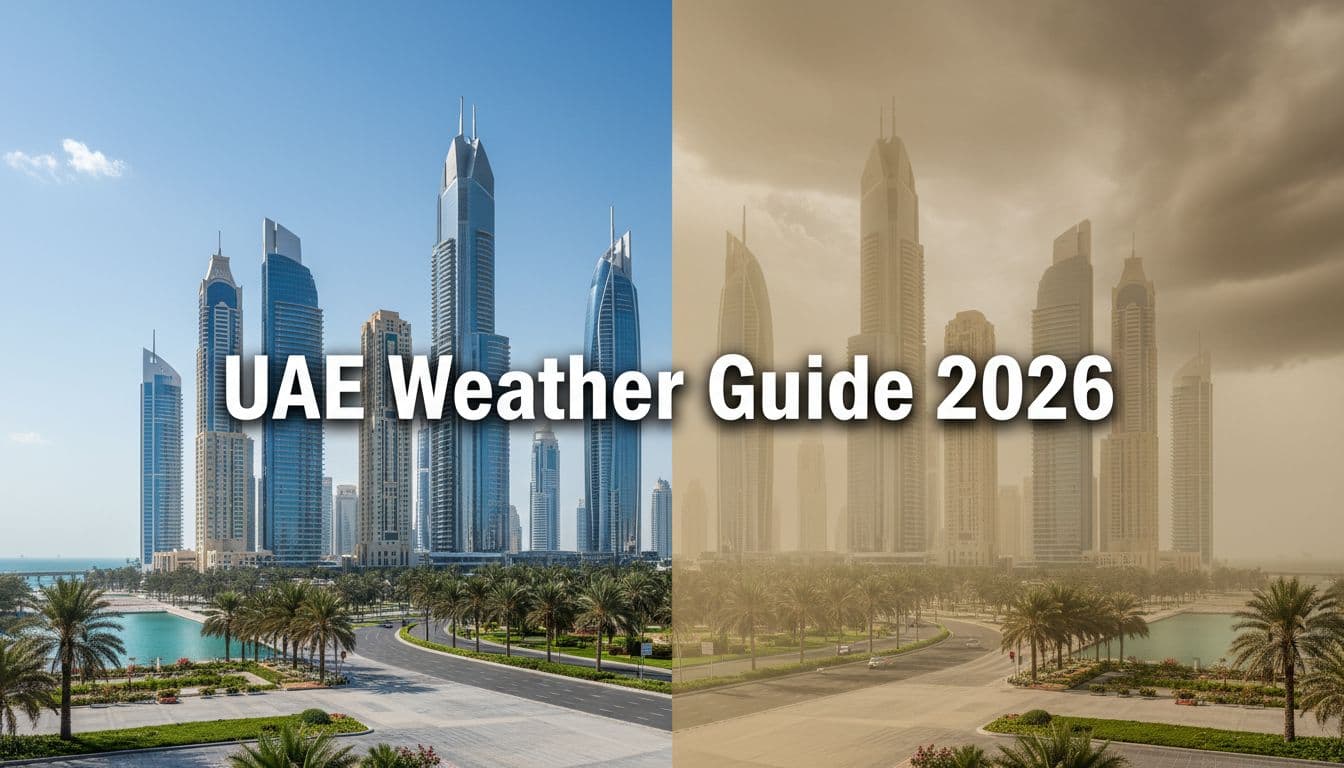
The UAE doesn’t have one endless season of heat. It has distinct weather periods, including mild winter, the unsettled Sarayat season, intense summer heat and humidity, Shamal winds, and occasional spells of heavy rain, dust, and low visibility. That’s why understanding local weather matters, whether you live, drive, hire staff, run sites, or serve customers across the country.
This guide is built for residents, drivers, employers, outdoor workers, retailers, tourism businesses, construction firms, and service providers in Dubai, Abu Dhabi, Sharjah, Ajman, Ras Al Khaimah, Fujairah, Umm Al Quwain, and Al Ain. Weather in the UAE can affect road safety, delivery times, footfall, staffing, outdoor work schedules, and even stock planning, especially during humid summer months and unstable spring conditions.
You’ll find a clear overview of the main UAE weather patterns, when they usually happen, how to follow official updates from the National Center of Meteorology (NCM), and what practical steps make sense for daily life and business operations.
For more local updates and business resources, see the UAEThrive blog, explore UAE businesses and services, or get your UAE business discovered for free.
How UAE weather works across the year
UAE weather follows a clear annual rhythm, but it rarely changes in a neat, four-season way. Instead, you get a mild winter, a short unsettled spring period, a long stretch of heat and humidity, and repeated spells of dust, haze, and strong winds.
That matters in daily life, and it matters in business. A beach café in Dubai, a delivery fleet in Abu Dhabi, a construction team in Sharjah, and an events organiser in Ras Al Khaimah all feel the weather differently. In simple terms, the UAE year is less about leaves falling or snow arriving, and more about comfort, humidity, visibility, and heat stress.
Winter in the UAE, cooler days, light rain and peak outdoor season
From December to mid-March, the UAE is at its most comfortable. Daytime temperatures often sit around 22°C to 30°C, while nights commonly fall to 12°C to 20°C, depending on the emirate, elevation, and distance from the coast. In inland spots and desert areas, early mornings can feel much colder than many first-time visitors expect.
This is the season when the country opens up. Beaches are pleasant, parks stay busy, desert camps fill up, and outdoor markets, sports events, and festivals draw steady crowds. If summer feels like walking into a hairdryer, winter feels more like a warm balcony morning with a breeze.
 Rain is still limited in winter, so this is not a wet season in the European sense. Even so, it is more likely to rain in winter than in summer, with brief showers and occasional unsettled spells more common from January into late winter. Some days start bright and end with passing cloud, gusty winds, or a short burst of rain.
For businesses, this is often the strongest outdoor trading period of the year. Tourism, hospitality, event services, transport, and outdoor dining usually benefit because people stay out longer and move around more comfortably. In busy areas of Dubai, Abu Dhabi, Fujairah, and Ras Al Khaimah, that can translate into stronger footfall and longer evening trade.
In practical terms, winter is the UAE’s peak comfort season, not just a cooler version of summer.
Sarayat season, why spring can bring sudden storms and fast weather changes
From around mid-March to May, the UAE enters what many residents know as Sarayat season. This is one of the trickiest weather periods of the year because it can change fast. A morning may start clear, warm, and calm, then shift by afternoon into gusty winds, dark cloud, short heavy rain, thunder, or even hail in some areas.
Temperatures rise quickly through this period. Early in the season, days may still feel manageable, often around the low 30s. By late spring, many places move well into the mid to high 30s, and hotter inland areas can climb higher. Humidity also starts to build, which makes the air feel heavier.
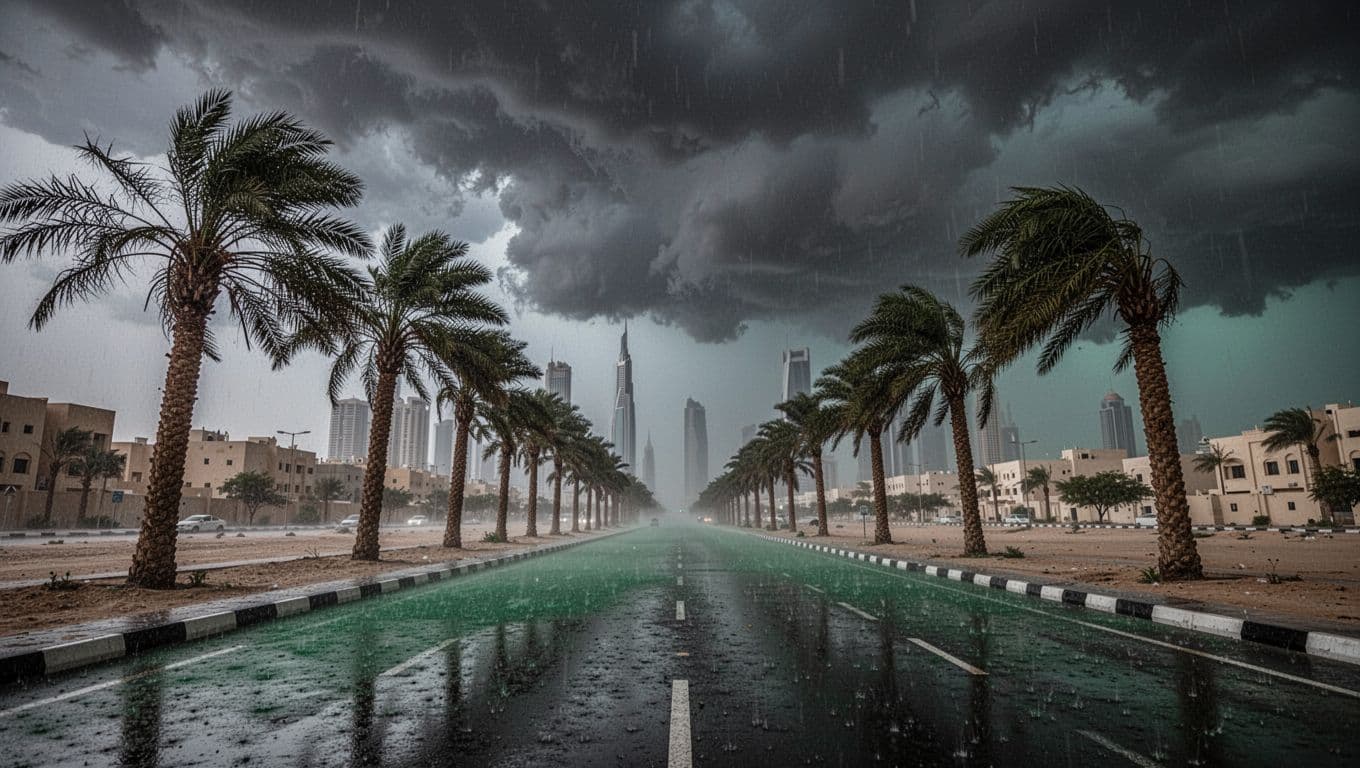 What makes Sarayat stand out is instability. Warm air near the surface can interact with cooler air aloft, and local conditions can flip quickly. That is why people get caught off guard. The sky may look harmless, but then visibility drops, roads turn slick, and thunderclouds build with little warning.
You may notice these features during Sarayat:
- Warm to hot days with rising humidity
- Gusty winds that pick up suddenly
- Thunderclouds and lightning
- Short, heavy showers
- Hail in some cases
- Dust and reduced visibility, especially before or around storm activity
Eastern areas, including places closer to the Hajar Mountains, can sometimes feel these changes more strongly. Fujairah and nearby regions may see more dramatic cloud build-up than flatter coastal areas, although conditions can vary widely across the country.
For business planning, Sarayat is a season to treat with respect. Outdoor worksites, delivery routes, marine activities, and event set-ups can all be affected by a weather turn that arrives faster than expected. A clear forecast check in the morning helps, but during this period, businesses also need flexibility by afternoon.
Summer and early autumn, extreme heat, humidity and dusty skies
From June to mid-September, the UAE shifts into full summer mode. This is the long, intense phase that shapes work schedules, travel habits, and customer behaviour across the country. Daytime temperatures often range from 38°C to 46°C, and during stronger heatwaves some areas, especially inland, may push close to 50°C.
The bigger issue is not the number alone. It is how the heat builds. By late morning, roads, pavements, and building surfaces radiate warmth back into the air. Then humidity rises in many coastal areas, especially in Dubai, Abu Dhabi, Ajman, Sharjah, and Umm Al Quwain. As a result, the body works harder to cool itself, and heat stress climbs fast through the day.
Sea temperatures also become very warm. That sounds pleasant, but it often means less relief at the coast. Even after sunset, conditions can stay sticky, with night temperatures commonly around 30°C to 35°C in the hottest periods.
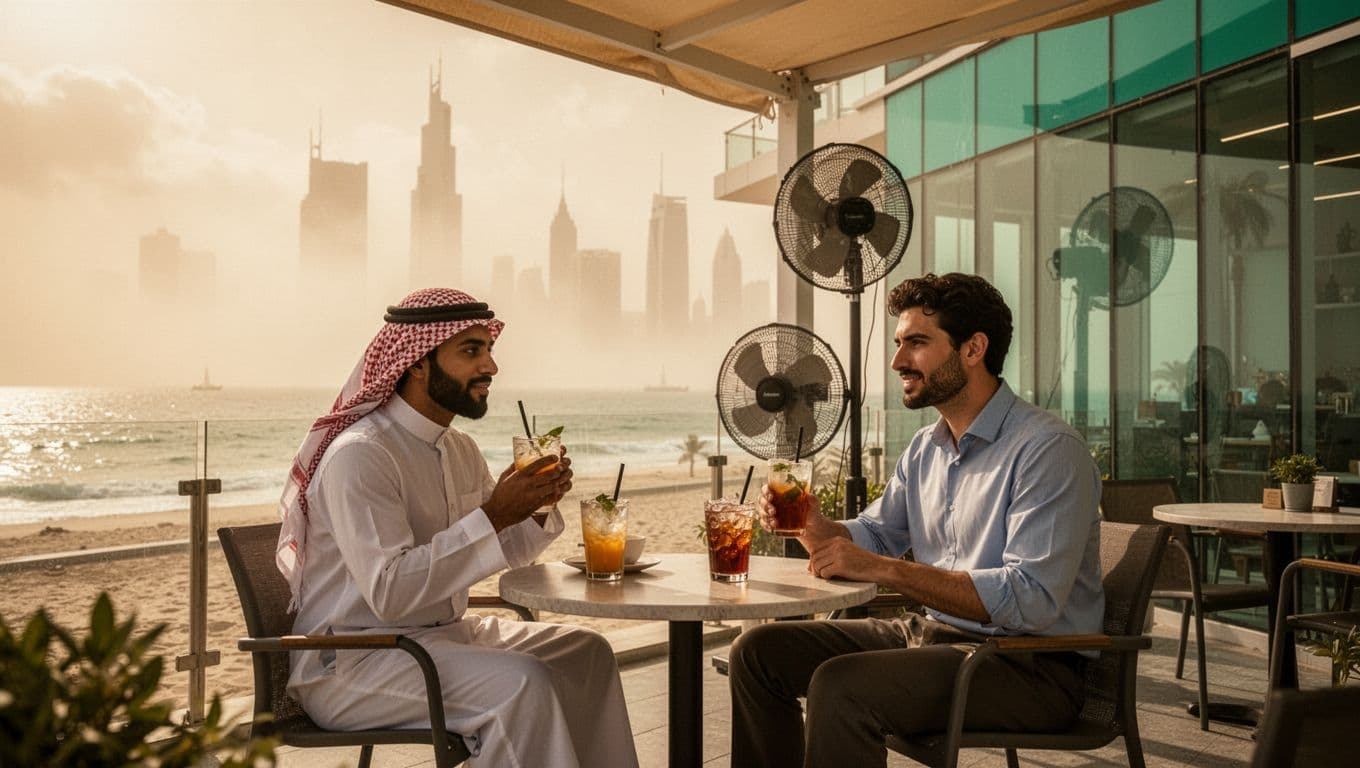 In business terms, summer changes customer flow and staff routines. Footfall often shifts towards early mornings, evenings, malls, and indoor venues. Outdoor labour, field service calls, logistics, and site inspections need tighter planning because even simple tasks become harder in extreme heat.
A quick seasonal snapshot helps:
| Period | Typical daytime range | Typical night range | Main feel |
|---|---|---|---|
| June to mid-September | 38°C to 46°C | 30°C to 35°C | Intense heat, humidity, haze |
| October to November | 30°C to 38°C | 20°C to 28°C | Less severe, but still often hot |
By October and November, conditions usually improve, but not overnight. Autumn in the UAE is more of a transition than a dramatic season change. Days can still feel hot, especially early in October, while humidity, haze, and warm seas may linger. In other words, it cools by degrees, not by surprise.
Shamal winds, dust and haze, what they are and when they matter most
A Shamal is a strong north-westerly wind that sweeps across the UAE and nearby Gulf region. In plain terms, it is the kind of wind that lifts dust and sand, turns the sky hazy, and makes roads, ports, and outdoor work harder to manage.
Shamal winds are often linked with summer, especially when hot, dry conditions dominate. Still, they can appear in other parts of the year as well, including spring. When they strengthen, visibility may drop sharply even without any rain. That is important because many people associate bad weather with storms or showers, but dust events can create real disruption on their own.
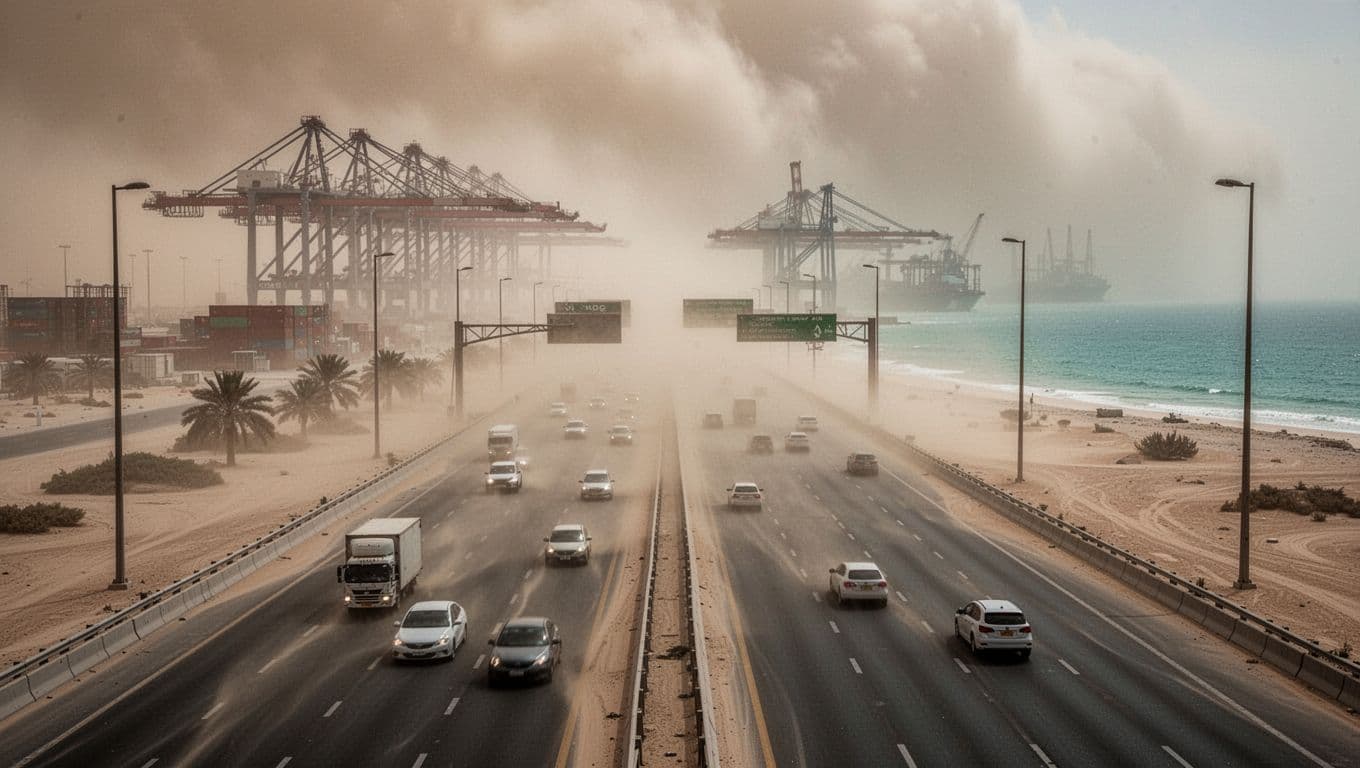 Here is where Shamal conditions matter most:
- Road transport: Lower visibility can slow traffic and raise accident risk
- Ports and marine activity: Rougher conditions can affect movement and timing
- Construction and outdoor work: Dust reduces comfort and may disrupt tasks
- Retail and hospitality: Hazy, windy days can reduce outdoor footfall
- Public health and comfort: Dust can irritate eyes and airways, especially for sensitive groups
The key point is simple. Dust does not need rain to become a safety issue. A dry, windy day with blowing sand can still affect schools, site work, commutes, tourism, and supply chains.
For business owners, Shamal periods are a reminder that weather risk is not only about temperature. Sometimes the biggest problem is what you can no longer see clearly, how long delivery times stretch, or whether customers decide to stay indoors. If your business depends on movement, visibility, or outdoor comfort, these winds deserve a place in your planning.
How to check official UAE weather forecasts and alerts
If you want the most reliable UAE weather forecast, start with the official NCM tools. That gives you one trusted source for Dubai, Abu Dhabi, Sharjah, Ajman, Ras Al Khaimah, Fujairah, Umm Al Quwain, and inland areas such as Al Ain.
This matters because UAE weather can turn from normal to disruptive quite quickly, especially in spring and during dusty periods. For daily life and business planning, official data is the difference between a smooth day and a costly surprise.
Use the NCM app and website for forecasts in every emirate
The easiest place to begin is the National Center of Meteorology app, often listed as Weather UAE or UAE Weather in app stores. You can also use the NCM mobile site for forecast maps and warning tools, including the NCM forecast maps and the Early Warnings for All portal.
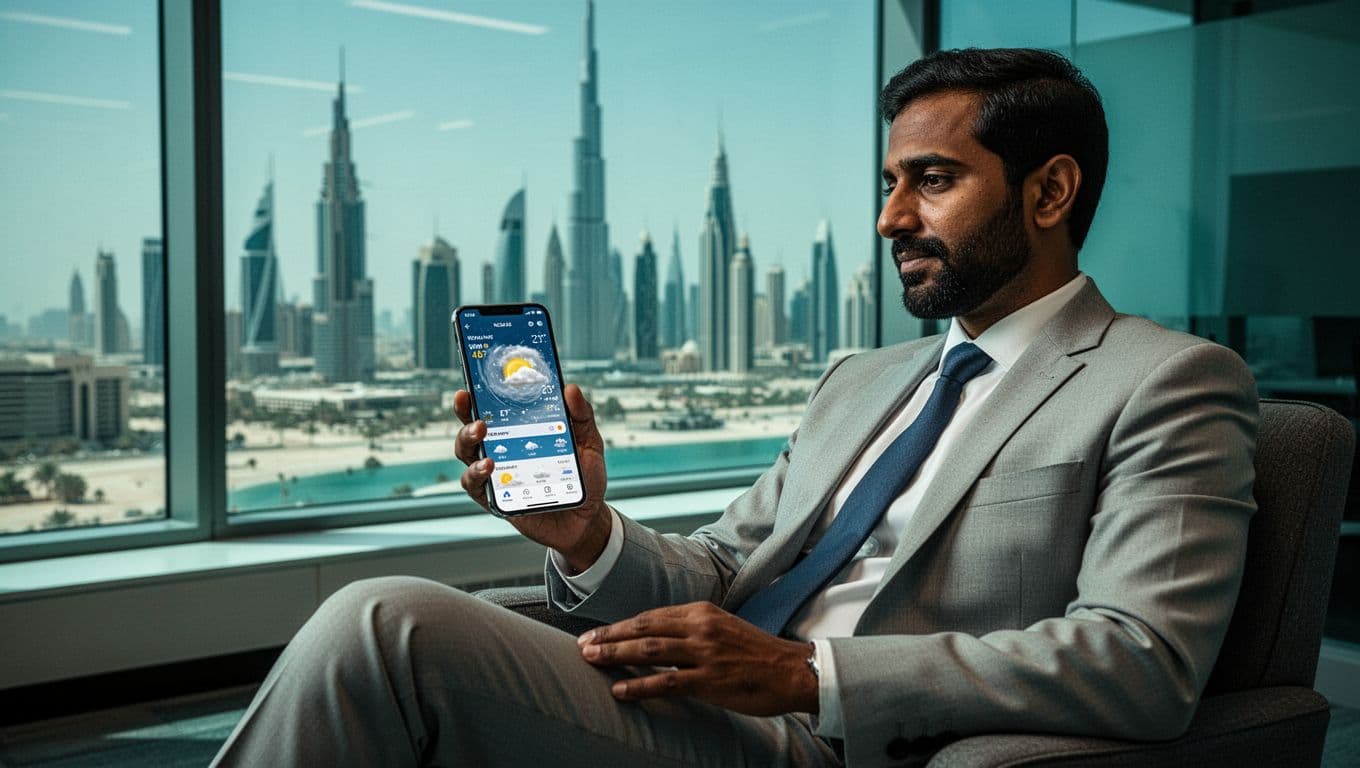 The good news is that you do not need a different source for each emirate. The same official platform covers weather across the UAE, so you can check conditions in Dubai before a meeting, Abu Dhabi before a site visit, or Fujairah before a weekend drive. In other words, one source can follow you wherever your plans take you.
On the app or site, you can usually see:
- Current conditions, so you know what is happening now
- Hourly and daily forecasts, useful for the next few hours and the next few days
- Temperature and feels-like heat, which matters more than the air temperature alone
- Wind speed and direction, especially useful during dusty or marine conditions
- Rain probability, including short unsettled spells
- Radar and satellite views, which help you spot moving cloud and rain areas
- Marine information, useful for fishing trips, coastal work, and sea transport
For business owners, this is practical, not academic. A cleaner in Dubai Marina, a delivery team in Abu Dhabi, a school in Sharjah, and a tour operator in Ras Al Khaimah all need the same thing, clear local weather data they can act on quickly.
If you’re also improving how customers find your business across the Emirates, this practical approach fits well with the same local visibility mindset covered in this guide on how to list your business on UAEThrive for free.
The simplest rule is this: use one official source first, then make your plans around the latest update, not yesterday’s sky.
What to check before you commute, travel or plan outdoor work
A quick forecast glance is helpful, but a proper weather check is better. Before you leave home, send a team out, or confirm an outdoor booking, review the forecast like a pilot checks instruments, not like someone peeking out of a window.
Start with the basics, then move to the risk points. In most cases, these are the details worth checking:
- Temperature: High afternoon heat can change work pace and comfort.
- Feels-like temperature: This combines heat and humidity, so it often tells the real story.
- Humidity: High humidity makes outdoor work and waiting times harder.
- Wind speed: Strong winds can affect roads, cranes, temporary structures, and the sea.
- Visibility: Dust, fog, haze, or rain can slow travel and raise risk.
- Rain chance: Even a short shower can affect roads, school runs, and outdoor events.
- Storm warnings: These matter most during unstable weather periods.
- Sea conditions: Check this before any marine trip, watersport activity, or coastal work.
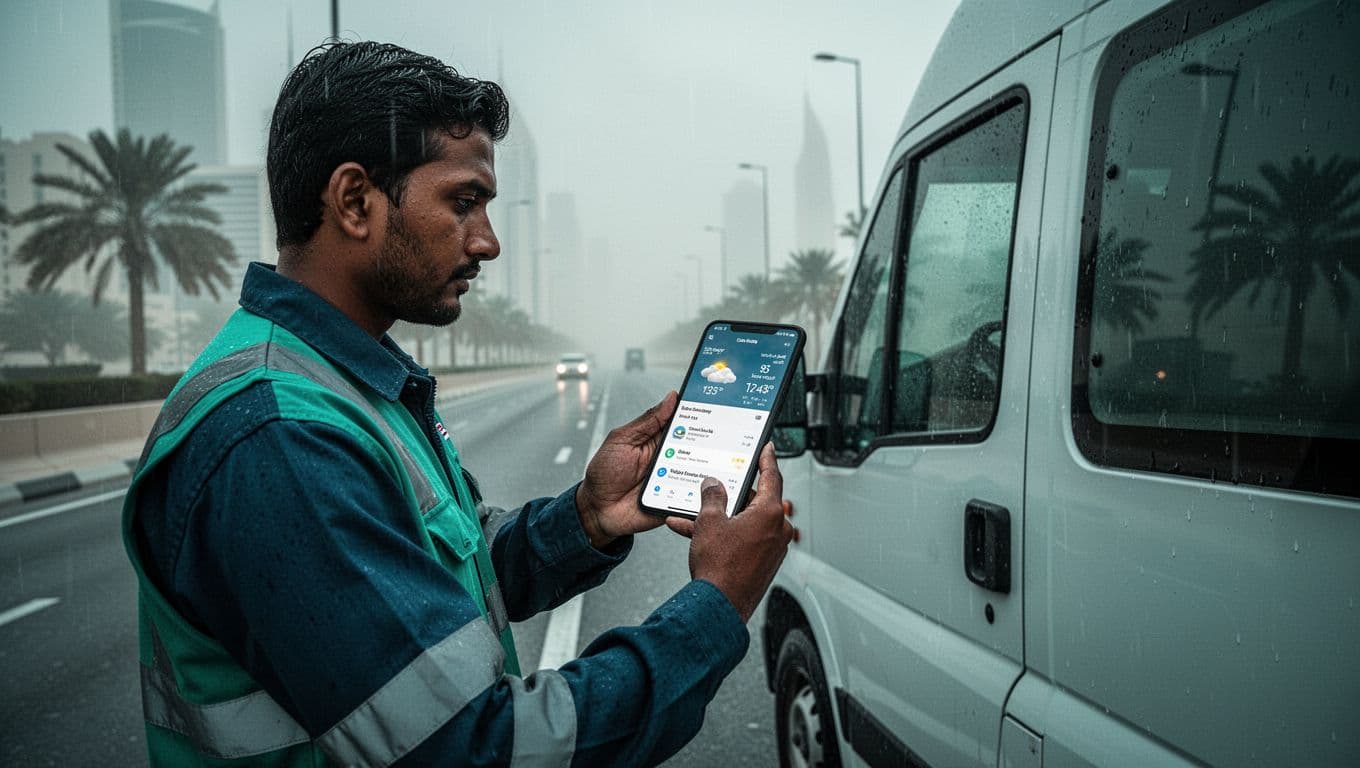 Different people will focus on different details. However, the logic stays the same. You are checking whether the day is merely warm, or whether it carries an operational risk.
Here is how that helps in real life:
- Office workers: Check heat, rain, and traffic-related visibility before commuting.
- Delivery teams: Watch wind, dust, visibility, and storm alerts before routes begin.
- Event planners: Review hourly changes, not just the daily summary.
- Schools and nurseries: Look at rain risk, thunder, and outdoor break conditions.
- Tourism operators: Focus on comfort, visibility, wind, and marine conditions.
- Families: Check heat, humidity, and timing before parks, beaches, or long drives.
A practical habit works best. Check once in the morning, then check again around midday if your plans depend on outdoor conditions. That second look matters most during Sarayat season, dust events, or any day with changing cloud and wind.
Why official alerts matter more than social media rumours
A dramatic weather clip can spread fast, but it may tell you very little. It could be old, filmed in another emirate, cropped to hide the wider conditions, or posted without timing. That is why official alerts matter more than social media rumours.
In the UAE, local conditions can vary sharply. It might rain in one area while another stays dry. One road can be clear while another has poor visibility. A shared video rarely gives you the full picture, and it almost never tells you what happens next.
Official alerts are more useful because they are built for action. They can show you:
- Whether a warning is active now
- Which areas are affected
- What type of hazard is expected
- When conditions may improve or worsen
Push notifications are especially helpful. They bring the warning to you, which is far better than relying on a forwarded message in a group chat. Map-based warnings also help because they show where the issue sits, not just that “bad weather” is somewhere in the country.
During unsettled periods, readers should pay close attention to official updates, because rain, hail, dust haze, and strong winds can develop quickly and vary by area and by hour. That is exactly why timely NCM alerts matter.
Keep it calm and simple. If an alert comes from the official source, act on it. If a clip looks dramatic but has no clear date, place, or warning level, treat it as noise until the NCM confirms the picture. For more practical UAE updates and business-focused guidance, you can also follow the UAEThrive blog.
How each weather period affects daily life in the UAE
Weather in the UAE shapes more than comfort. It changes how people drive, when families go out, and whether a weekend trip runs smoothly or falls apart. A cool January evening in Dubai feels very different from a humid August night in Abu Dhabi, and a clear morning can still turn awkward by afternoon during unsettled spring weather.
For most residents, the real issue is not the season label. It’s the day-to-day effect on visibility, heat, humidity, and travel timing. That’s where practical planning helps.
Driving, commuting and road safety during rain, fog, dust and glare
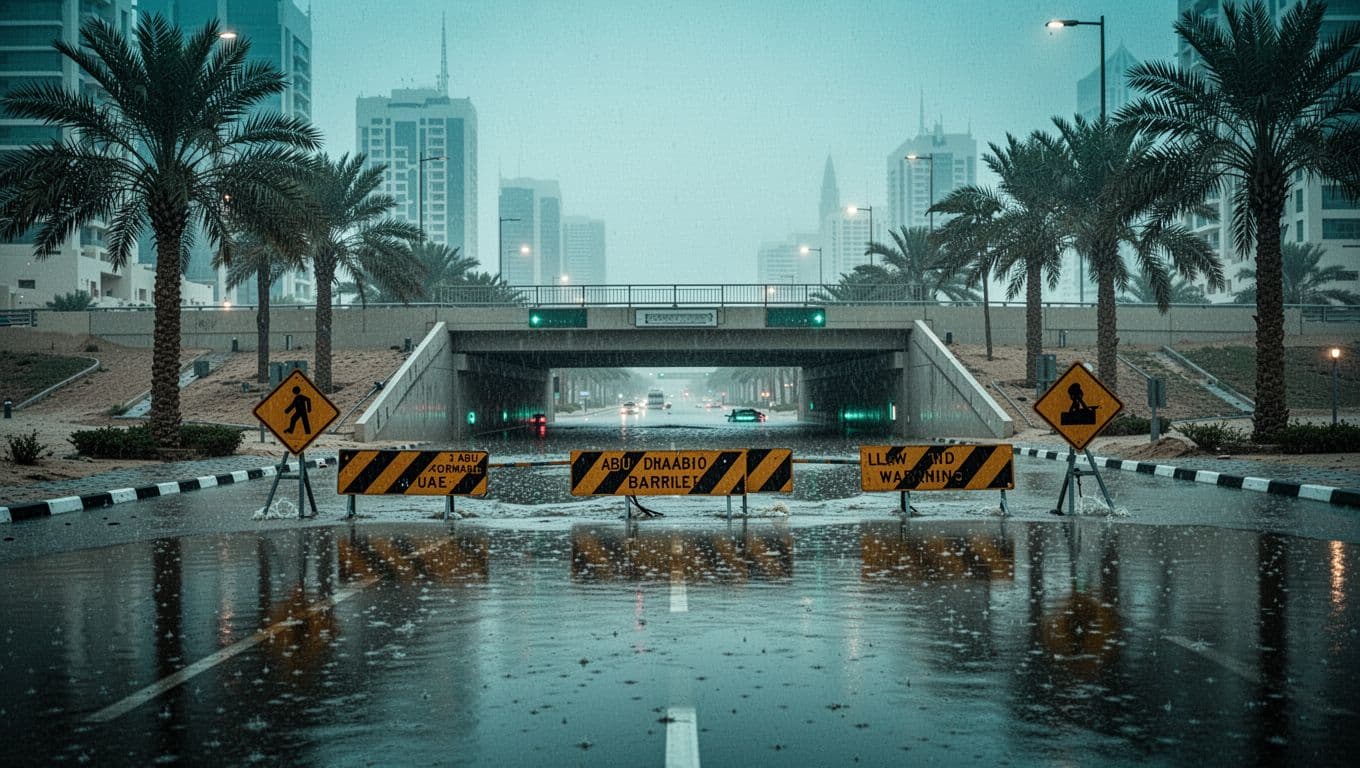
Rain in the UAE often arrives in short, intense bursts. Roads can go from dry to slick within minutes, and standing water may build quickly in low-lying areas, slip roads, and underpasses. On busy corridors such as E311 and E611, heavy rain can also bring ponding, slower traffic, and sudden congestion.
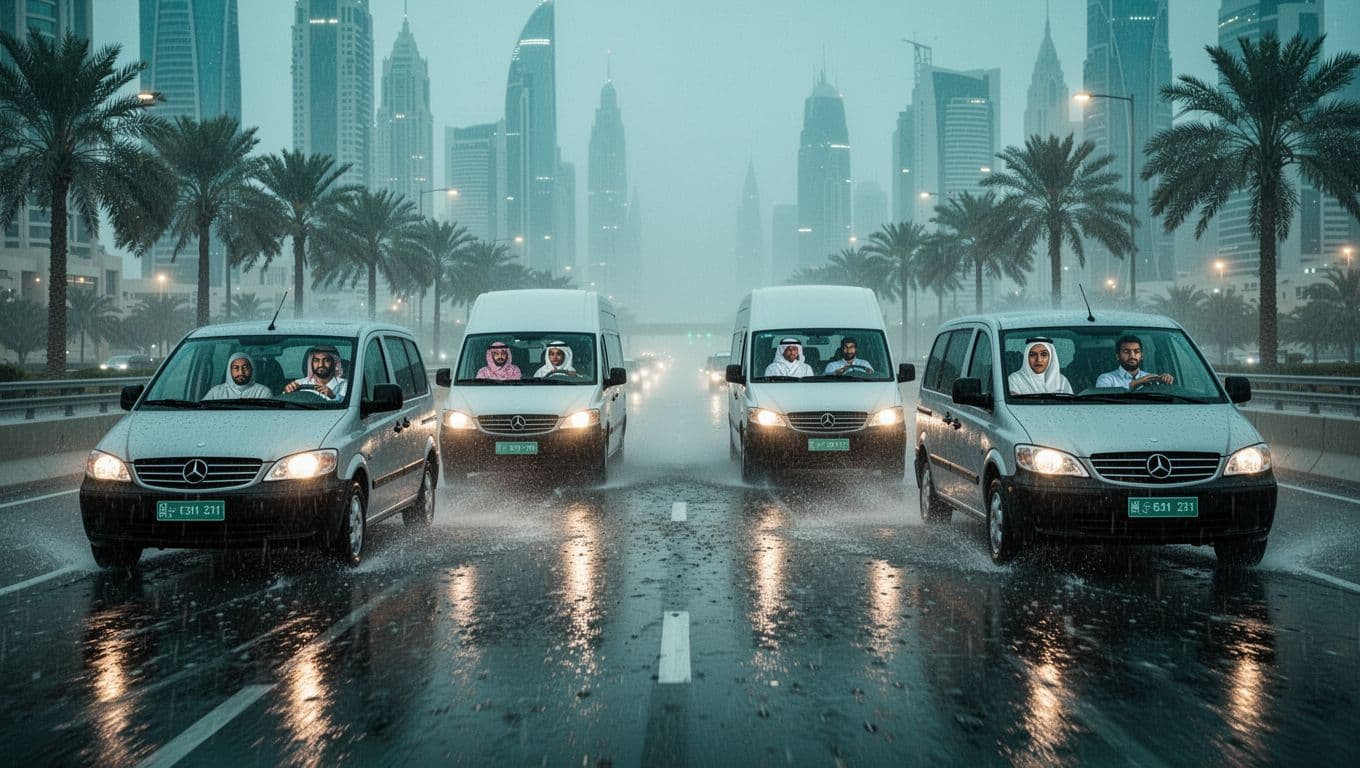 The risk is not only the rain itself. Motorway spray from larger vehicles can hide lane markings, while wet surfaces reduce tyre grip. In some places, underpasses and flood-prone dips fill faster than drivers expect. A road may look shallow, but water can hide kerbs, debris, or a deeper channel underneath.
Fog brings a different problem. It usually affects early mornings more than afternoons, especially in cooler months. Visibility can collapse with little warning, which turns a normal commute into a slow, tense crawl. Dust haze and Shamal winds can do the same thing, except the air looks beige rather than white. Add low sun glare at sunrise or sunset, and even a routine drive feels like looking through a dirty windscreen.
A few simple habits make a real difference:
- Leave more distance so you have time to brake smoothly.
- Reduce speed early, not at the last second.
- Avoid wadis and flood-prone areas during rain alerts.
- Use lights properly, especially in fog or dust.
- Don’t force your way through standing water if depth is unclear.
In bad weather, the safest driver is usually the one who arrives later, not faster.
If visibility drops close to zero in dust or fog, slowing down is not enough on its own. Find a safe place to stop when possible, away from active lanes. That matters on long inter-emirate routes, where open stretches can feel manageable until conditions change all at once.
Outdoor plans, fitness and family routines by season
The easiest time for outdoor exercise is usually winter through early spring, when temperatures are milder and evenings stay comfortable. That’s when parks in Dubai, Abu Dhabi and Sharjah stay busy, beaches feel pleasant, and desert camps fill up. Morning walks, runs, padel sessions, and family cycling all become much more realistic.
 By late spring and summer, timing matters far more. Many people shift activity to early morning or late evening, because midday heat drains energy fast. Humidity makes this harder. A reading of 34°C may look manageable on paper, yet high moisture in the air can make it feel heavy and tiring, like exercising under a warm blanket.
That change affects family routines too. Beaches may still attract visitors, but comfort drops sharply once humidity rises. Parks become quieter in the middle of the day. Desert trips need more care because the heat builds over sand and reflected sunlight. Mountain visits, especially in the eastern areas, can feel cooler than the coast at times, but weather there can also shift more quickly.
When outdoor conditions stop feeling enjoyable, indoor venues become the sensible option. In summer, that often means:
- Gyms and indoor tracks for regular exercise
- Malls and family attractions during peak afternoon heat
- Indoor play areas instead of exposed parks
- Early beach visits rather than long midday stays
In other words, the best season for outdoor life is not just the coolest one. It’s the period when heat and humidity stay low enough for your body to recover well. Comfort is not only about the number on the forecast.
Travel, flights and weekend plans, when weather causes disruption
Weather disruption in the UAE is often sudden rather than long-lasting. A storm may not last all day, but it can still affect flights, delay road journeys, or push families to cancel plans. Low visibility from fog or dust is one of the main troublemakers, because it affects both runways and roads.
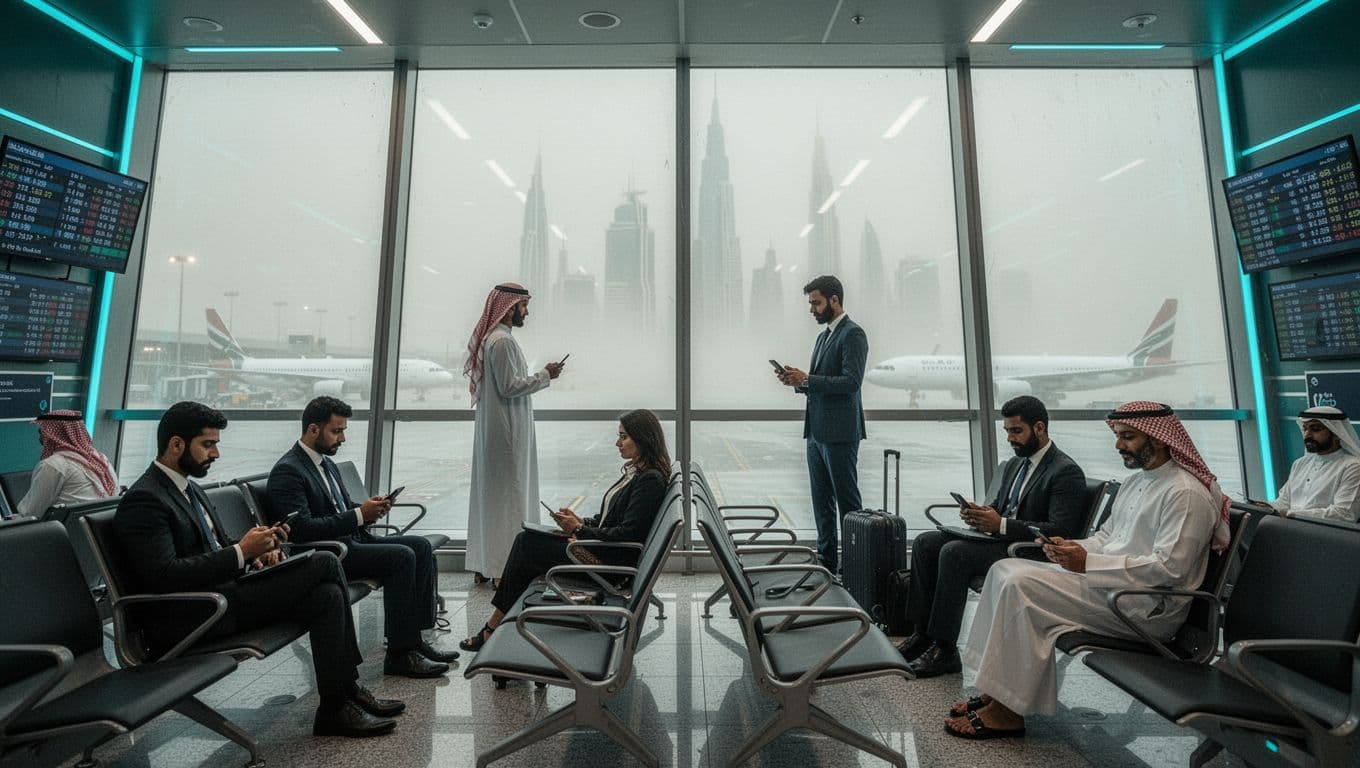 Foggy mornings can delay departures and arrivals, especially when visibility drops around major airports. Heavy rain may also slow airport operations, while Shamal winds and dust can create rougher air, poor visibility, and travel knock-on effects across the day. If you’re driving between emirates, the same weather can stretch what should be a simple journey from Dubai to Abu Dhabi, or Sharjah to Ras Al Khaimah.
Weekend plans are just as exposed. Boat trips may be cancelled when seas turn rough. Mountain drives need extra care after rain because surfaces can stay wet and runoff may affect access roads. Outdoor events, desert outings, and beach bookings also become less predictable during unstable spring periods.
Before a longer journey, it helps to check official forecast tools for the specific area you are visiting. That’s especially useful for:
- Long inter-emirate drives
- Mountain visits in the east
- Boat trips and coastal plans
- Outdoor events or desert weekends
One more point matters here. Weather can vary a lot between the coast, desert, and eastern areas. Dubai may stay hazy while Fujairah sees cloud build-up near the mountains, or Abu Dhabi may feel hotter and drier than a more humid northern coast. A plan that looks fine in one emirate may need a rethink in another.
What UAE businesses should plan for in every season
Weather planning is not only about safety. It also shapes demand, staffing, delivery times, customer expectations, and how easily people can find you when they need help quickly.
In the UAE, the trading pattern often changes with the forecast. Winter brings people outdoors. Summer pushes them inside. Then dust, fog, rain, and strong winds can disrupt even a well-run day. Businesses that plan by season usually make better decisions on stock, schedules, and customer communication.
Retail, hospitality and tourism, matching offers to the weather
For many customer-facing sectors, winter is the closest thing the UAE has to a peak outdoor season. Cooler days and comfortable evenings usually support terrace dining, beach clubs, pop-ups, guided tours, markets, and family events. In Dubai, Abu Dhabi, Ras Al Khaimah, and Fujairah, this often means stronger footfall, longer dwell time, and better evening trade.
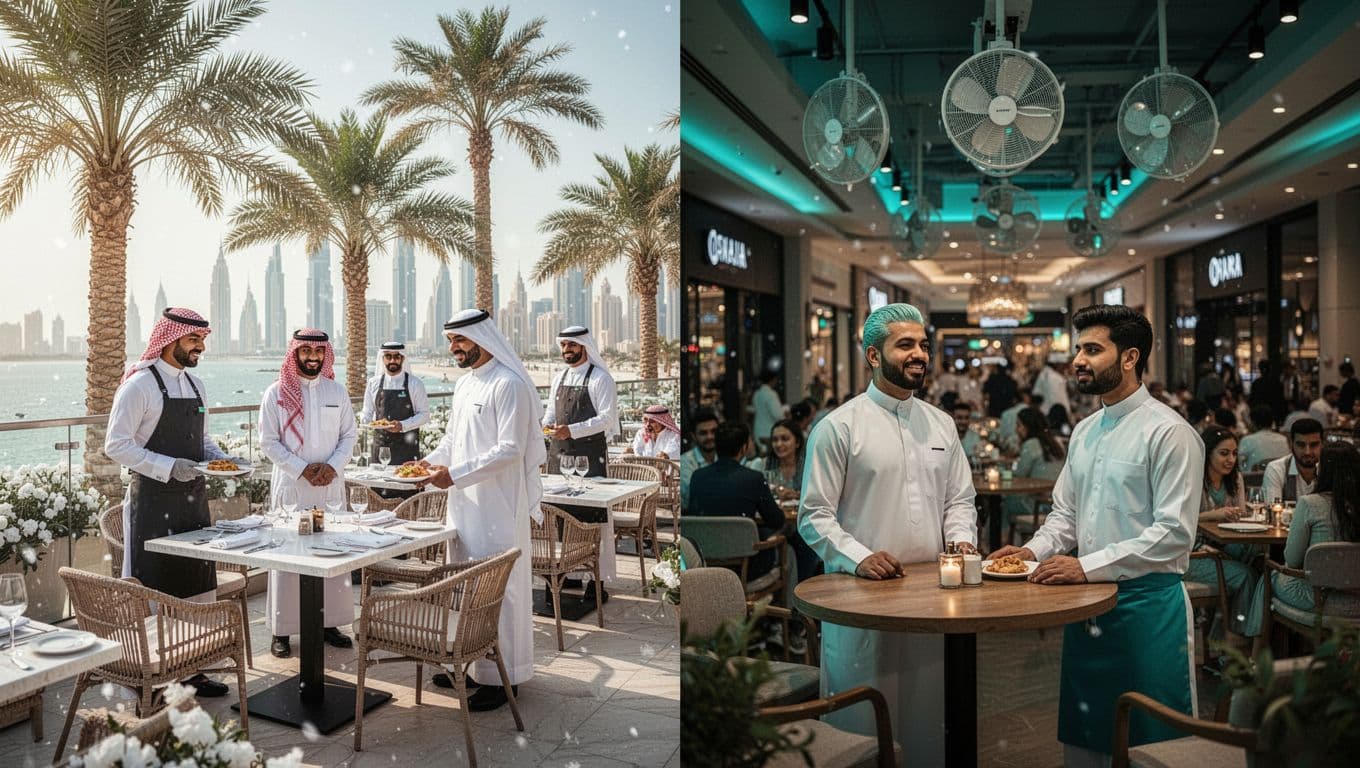 Summer changes the picture. People still spend, but they spend differently. Demand often shifts towards malls, cinemas, indoor attractions, cafés inside retail centres, home delivery, and later evening visits once the heat eases. A restaurant with outdoor tables in January may need to think more like a delivery-first business in July.
That shift affects more than marketing. It should shape offers, staff rotas, and stock levels. For example:
- Winter offers often work best when they highlight outdoor comfort, family dining, tourism packages, and event-based promotions.
- Summer offers usually perform better when they focus on indoor convenience, value bundles, chilled products, home delivery, and late-night trade.
- Shoulder seasons need flexibility, because a warm week can still support outdoor demand, while a dusty or humid spell may push people back indoors.
Staffing should follow the same logic. More floor staff may be needed during winter evenings, while summer may require stronger delivery coverage, extra customer service support, or later shift patterns. Stock planning matters too. Cold drinks, light meals, indoor entertainment packages, and convenience-led products often move differently across the year.
A weather-aware offer works like a shop window that changes with the season. It meets people where they are, not where they were last month.
There is also a visibility angle. When customers search for “near me” services during hot, dusty, or rainy conditions, they usually want the quickest useful answer. That is why accurate opening hours, service details, delivery options, and location data matter in local search and directories. If your listing says outdoor dining but not indoor seating, or shows old hours during summer, you may lose customers at the moment they are ready to buy.
Construction, delivery and field teams, protecting people and schedules
For site-based work, weather can change output very quickly. Heat is the most obvious risk, especially from late spring into early autumn, but it is not the only one. Dust, humidity, rain, and high winds can also slow work, affect safety, and push jobs off schedule.
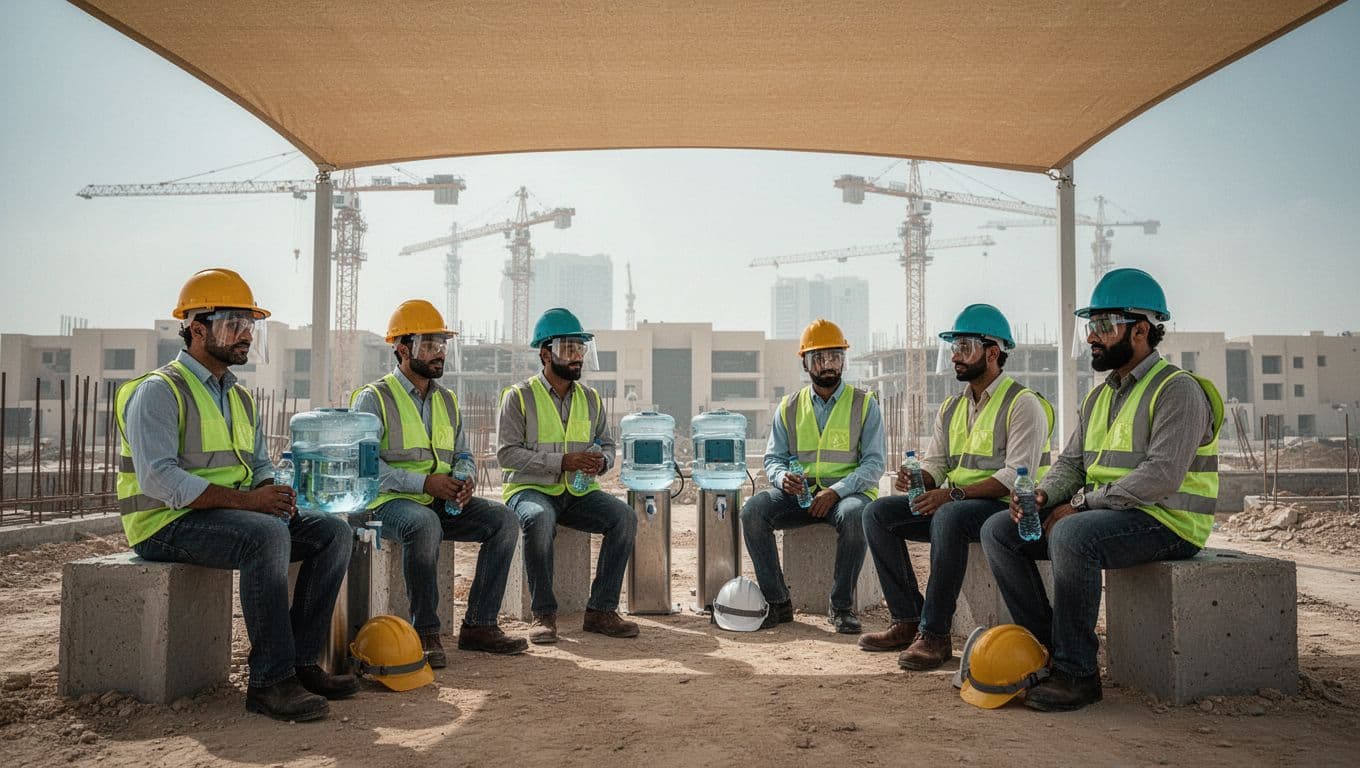 A practical plan starts with the basics. Teams need regular hydration, shaded rest areas, suitable PPE, and work timing that reflects the conditions on the ground. When the heat climbs, simple tasks can take longer and become more tiring. That affects construction crews, delivery drivers, maintenance engineers, landscapers, cleaners, installers, and mobile technicians across Dubai, Sharjah, Abu Dhabi, Al Ain, and the Northern Emirates.
Daily planning should cover a few clear points:
- Work timing: Move heavier outdoor tasks to cooler hours where possible.
- Hydration and shade: Make breaks easy to take, not hard to ask for.
- PPE and exposure: Use gear suited to dust, sun, and site conditions.
- Route changes: Adjust delivery or field service routes if visibility drops or roads flood.
- Task sequencing: Bring indoor, shaded, or lower-risk jobs forward when conditions turn.
Rain and wind matter more than some teams expect. Heavy rain can delay site access, inspections, concrete work, roofing, fit-out deliveries, maintenance visits, and external cleaning jobs. High winds can affect scaffolding, lifting work, temporary barriers, and any task that depends on stable conditions. Even a short disruption can knock the rest of the day off course.
Dust exposure is another problem that tends to creep up rather than arrive with drama. During a Shamal or any hazy spell, visibility can drop and air quality can worsen. That can slow road transport, reduce comfort on site, and affect tools, materials, and finishing work. In delivery and logistics, the best route on a clear day may not be the best route by afternoon.
This does not need to become complicated. Clear daily weather checks, a short supervisor briefing, and simple stop-or-adjust rules can prevent a lot of confusion. Teams work better when they know the plan, the fallback plan, and who makes the call if conditions worsen.
Client communication, bookings and service recovery when weather turns
When the weather changes suddenly, silence creates most of the frustration. Customers can usually accept a delay if they know what is happening, what comes next, and how you will put it right.
That is why simple communication matters. A short update by WhatsApp, SMS, email, or a website banner can save dozens of phone calls and protect the day’s bookings. It also helps staff give the same message to everyone, instead of making it up as they go.
A good update should answer three things fast:
- What has changed
- Who is affected
- What the customer should do next
For example, an outdoor cleaning company might reschedule afternoon bookings because of rain or strong wind. A clinic or office may warn customers about local access issues after flooding nearby roads. A restaurant or activity operator might update opening hours during severe weather, then switch bookings to a later slot once conditions improve.
The tone matters as much as the message. Keep it clear, calm, and useful. People do not want a long explanation when they are already delayed. They want a new time, a contact point, and confidence that someone is paying attention.
A simple service recovery approach often works best:
- Acknowledge the issue quickly.
- Offer the next available option instead of waiting for the customer to chase.
- Update all channels so your website, WhatsApp replies, and front desk say the same thing.
- Follow up after the disruption if the customer lost time or convenience.
Clear communication protects trust because it shows control. In bad weather, customers remember the business that kept them informed, not the one that disappeared for three hours.
Why local visibility matters when customers need help fast
Bad weather changes search behaviour. During extreme heat, dust, storms, or local flooding, people often stop browsing and start searching with urgency. They want a nearby service, a live number, clear opening hours, and proof that the business is real.
That applies across many sectors. A resident in Dubai may need car recovery after a breakdown in standing water. A tenant in Sharjah may search for AC repair during a heat spike. A facilities manager in Abu Dhabi may need urgent building maintenance, cleaning, logistics support, or legal help after access problems or property damage. In those moments, local visibility is not a branding extra, it is the front door.
For SMEs, this means your business details should be easy to find and easy to trust. At minimum, customers should be able to see:
- Your service area
- Your phone or WhatsApp contact
- Your opening hours
- Your category and specialism
- Whether you handle urgent or same-day requests
This is where a strong directory presence helps. If your company serves customers across Dubai, Abu Dhabi, Sharjah, Ajman, Ras Al Khaimah, Fujairah, or Umm Al Quwain, a well-built profile can help you appear when people search in a hurry. You can add your business to UAEThrive directory if you are not listed yet, or claim your UAE business listing if a profile already exists and needs updating.
Think of it as weather-proofing your discoverability. When conditions are normal, a good listing supports steady enquiries. When conditions turn, it can help customers reach you fast, and that speed often decides who gets the call.
Safety advice for heat, dust storms, heavy rain and flooding
In the UAE, weather risk is rarely just about comfort. It can affect your commute, your staff, your customers, and how safely you move through the day. A sensible plan does not need to be complicated, but it does need to match the hazard in front of you, whether that is heat, dust, poor visibility, or fast-rising water.
How to stay safe during extreme heat and high humidity
In summer, humidity can be as serious as temperature. A day that looks manageable on paper can still feel heavy, draining, and unsafe once moisture in the air rises. In coastal parts of Dubai, Abu Dhabi, Sharjah and Ajman, that sticky build-up often matters more than the headline number.
So, don’t judge risk by temperature alone. Check the feels-like reading, and treat it as the better guide for outdoor activity. If the air feels like a warm wet blanket, your body will struggle to cool itself.
A few habits make a real difference:
- Drink water regularly, not only when you feel thirsty.
- Wear light, loose clothing that helps heat escape.
- Move outdoor tasks to early morning or later evening when possible.
- Take indoor or shaded breaks before fatigue builds.
- Check on older relatives, children, outdoor workers, and anyone with health conditions.
Heat illness often starts quietly. You may first notice dizziness, headache, heavy sweating, nausea, cramps, unusual tiredness, or confusion. That is your warning light, not something to push through. Stop, cool down, move indoors, and get help if symptoms worsen.
If humidity is high, a lower temperature can still be dangerous.
This matters at work as well as at home. A technician in Al Ain, a delivery driver in Dubai Marina, or a site supervisor in Abu Dhabi can all lose focus faster in hot, damp air. Therefore, managers should plan shorter outdoor bursts, easier access to water, and a clear rule that rest breaks are normal, not optional.
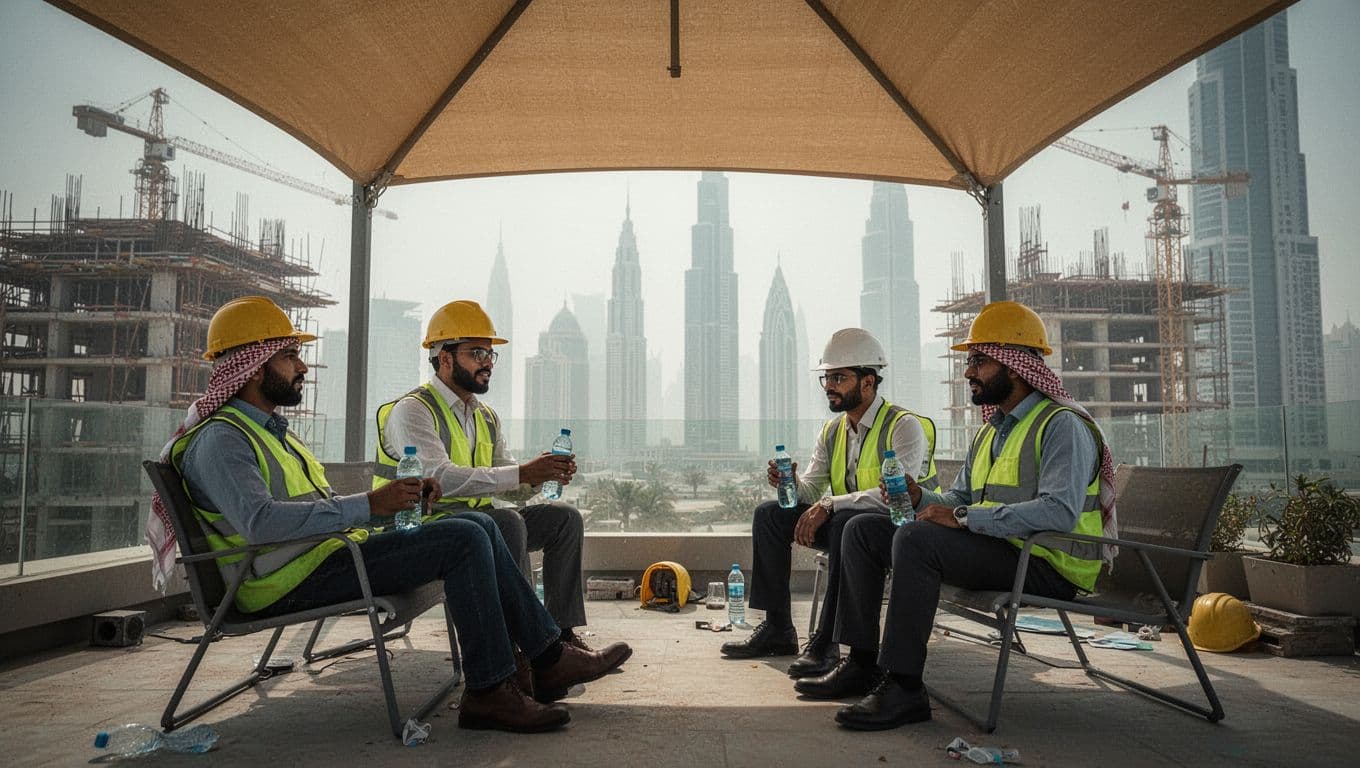 Vehicles need attention too. Heat puts extra strain on tyres, batteries, coolant levels, and air conditioning. Before longer trips, especially between emirates, check the basics. A short breakdown can turn serious quickly if you are stranded in direct sun.
Never leave children or pets in a parked car, not even for a few minutes. Cabin temperatures rise fast, and cracking a window does not make it safe. In the UAE heat, a parked car can become an oven in a very short time.
For official public guidance during severe conditions, the Ministry of Health and Prevention’s extreme weather advice is a useful reference. In simple terms, the safest routine is steady hydration, lighter clothing, less midday exposure, and more respect for humidity.
What to do in a dust storm or Shamal event
A dust storm can look dramatic, but the right response is usually calm and simple. If you can stay indoors, do that first. Close windows and doors, reduce outside movement, and wait until visibility improves.
Dust affects more than what you can see. It can also irritate your eyes, throat, and chest, especially if you have asthma, allergies, or other breathing issues. If you must go outside, cover your nose and mouth, and protect your eyes with suitable glasses rather than contact lenses alone.
At home or at work, secure anything loose before wind strengthens. Lightweight chairs, signs, bins, packaging, and temporary items can shift quickly once gusts build. That small job is easy before the storm, and annoying after it.
Driving is where many people make poor choices. If visibility drops sharply, avoid unnecessary trips. A delayed errand is cheaper than a damaged car or worse. When you do have to drive, think of the road as narrowed and shortened, because you can see less and react later.
The basic rules are clear:
- Use headlights, so other drivers can see you.
- Slow down early, not at the last second.
- Leave extra distance, because sudden braking becomes riskier.
- Keep both hands on the wheel, especially in stronger side winds.
- Avoid overtaking unless it is clearly safe.
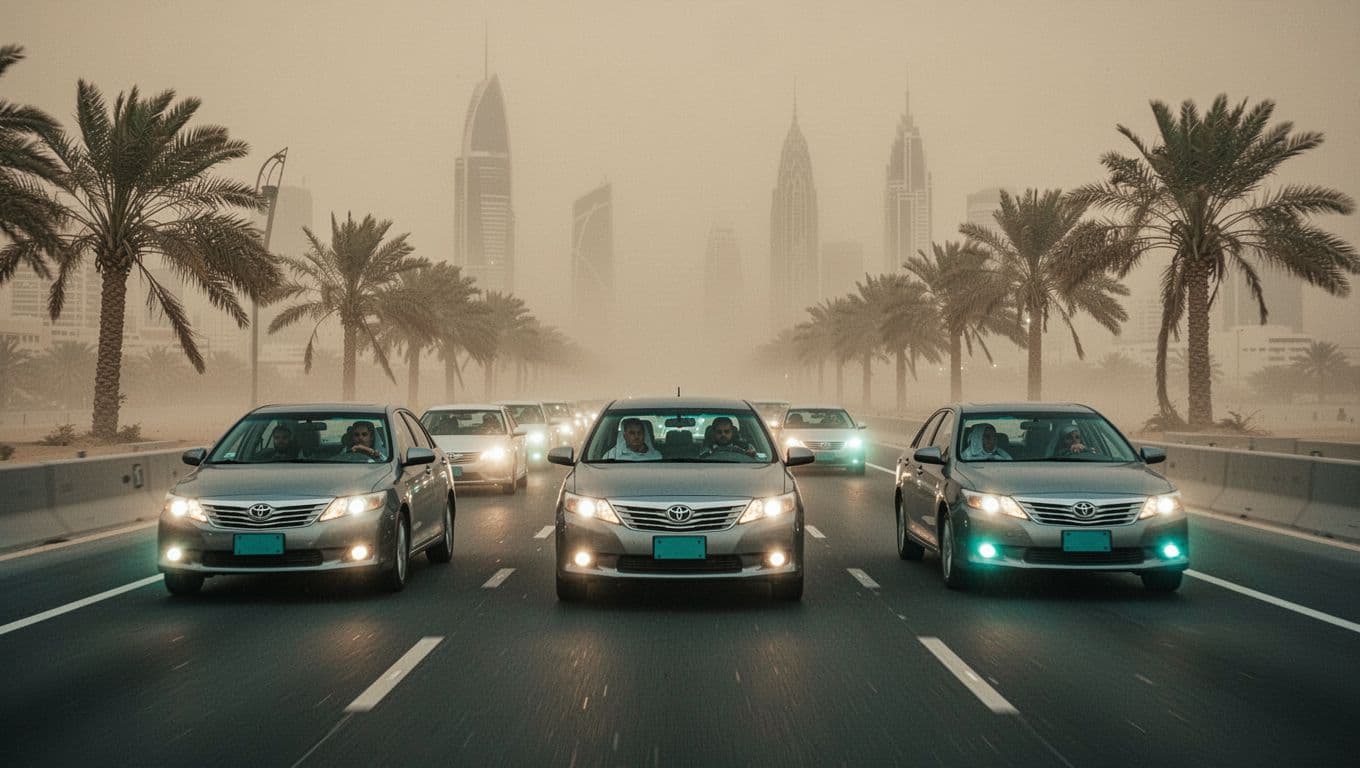 If visibility becomes extremely poor, do not keep pressing on out of habit. Find a safe place to pull over, away from active traffic lanes, and wait. That matters on major roads such as E311 and longer inter-emirate routes, where conditions can worsen over a short distance.
Official warning maps from the National Center of Meteorology are worth checking before travel on dusty days. Recent public alerts have also urged residents to follow safety measures during low-visibility conditions, especially when winds pick up across open roads and desert-facing areas.
Heavy rain and flood safety, common mistakes to avoid
Rain in the UAE is often brief, but that does not make it harmless. Water can build quickly in places that usually look dry and safe. The main danger is not always the amount of rain falling in front of you, but where that water is moving and collecting.
Avoid wadis, underpasses, low-lying roads, basement access points, and dips in the road network during heavy rain. These areas can flood faster than expected, and the depth is often hard to judge from the driver’s seat. A shallow-looking stretch may hide a deeper pocket, a kerb edge, or debris.
Common mistakes are easy to spot:
- Driving into standing water because another vehicle did
- Parking in known flood-prone spots
- Walking through pooled water without knowing what is underneath
- Assuming a road is safe because rain has eased
Those choices can lead to vehicle damage, falls, electric risk, or getting trapped where water keeps rising. If you are on foot, stay away from standing water where possible. It may hide slippery surfaces, open covers, sharp objects, or contaminated runoff.
The UAE has already seen how disruptive intense rain can be. In April 2024, exceptionally heavy rainfall caused major flooding across Dubai, Sharjah, Al Ain and other areas, with serious disruption to roads and airports. Similar storm impacts were reported again in 2025. The lesson is simple, rare weather still deserves routine caution.
 If you need to drive during rain, a quick pre-journey check helps more than people think. Focus on the items that matter most:
| Check | Why it matters |
|---|---|
| Tyres | Worn tyres lose grip faster on wet roads |
| Wipers | Poor wipers reduce visibility when spray builds |
| Lights | Other drivers need to see you early |
| Brakes | Wet conditions demand smoother, earlier stopping |
| Journey time | Extra time reduces pressure to rush |
Once you are moving, reduce speed, increase following distance, and avoid sudden lane changes. If a road is flooded, turn back and find another route. Water wins every time.
For broader emergency guidance, the UAE Government’s natural calamities page sets out practical steps for severe conditions. In daily life, though, the best rule is still the most boring one, and often the safest: if the road, underpass, or parking area looks questionable, don’t test it.
Related UAE weather guides for each season and risk
If you want more detailed advice, these guides cover the UAE weather patterns and disruptions most likely to affect daily life, travel, and business operations.
What is Sarayat Season in the UAE?
Use this guide if you want a closer look at the unstable spring period that usually runs from mid-March to May. It explains why clear mornings can turn into gusty winds, thunderclouds, short heavy rain, dust, or hail later in the day. This is especially useful for drivers, outdoor workers, schools, event planners, and businesses that need to stay flexible during fast-changing conditions.
UAE Winter Weather: What to Expect and Prepare For
This guide explains the UAE’s coolest and most comfortable period, when outdoor dining, tourism, events, desert trips, and family activities are at their busiest. It is useful for residents planning travel and routines, and for businesses in hospitality, retail, tourism, and outdoor services that want to make the most of higher footfall and stronger seasonal demand.
 Surviving UAE Summer: Heat, Humidity and Business Continuity
If you need practical advice for the hottest months of the year, start here. This guide covers extreme heat, coastal humidity, warm nights, staff safety, customer behaviour, delivery planning, and how businesses can adapt schedules and services during the long summer period across Dubai, Abu Dhabi, Sharjah, and the wider UAE.
Dust Storms and Shamal Winds: Safety Tips for Drivers and Outdoor Workers
This guide focuses on one of the UAE’s most disruptive dry-weather hazards. It covers reduced visibility, road safety, marine conditions, dust exposure, and the operational impact of strong north-westerly winds on transport, construction, field work, and outdoor trading.
How Heavy Rain and Flooding Affect UAE Roads and Construction
Rain in the UAE is often brief, but it can still cause major disruption. This guide looks at road flooding, underpasses, access issues, worksite delays, property risks, and the lessons businesses and residents should take from recent heavy-rain events across Dubai, Sharjah, Abu Dhabi, Al Ain, and nearby areas.
UAE Weather Alerts: How to Stay Safe and Informed in 2026
If you want a simple guide to checking forecasts and warnings properly, this article explains how to use official NCM alerts, warning maps, and forecast tools. It is useful for commuters, families, schools, delivery teams, and employers who need clear information rather than forwarded social posts or unofficial weather clips.
Business Continuity During Unpredictable Weather
This guide is written for UAE businesses that need to protect staff, schedules, bookings, customer communication, and service standards when the weather changes suddenly. It covers fallback planning, team responsibilities, rescheduling, client updates, supplier coordination, remote work options, and basic documentation after weather-related disruption.
Weather can affect far more than comfort. It can change travel times, customer demand, delivery schedules, outdoor work, and response times across every emirate.
If your business wants better local visibility when customers search during weather disruption, you can also add your business to UAEThrive or claim your existing listing.

The key lesson is simple: do not wait for the weather to turn before deciding how your business will respond. Don’t wait for the sky to turn grey before deciding what the business will do. Save the guide, share it with team leads, and treat it as part of normal operations rather than emergency reading.
UAE weather FAQ
What is the best way to check the UAE weather forecast?
The most reliable way is to use the National Center of Meteorology (NCM) website, app, and warning tools. These give official updates for Dubai, Abu Dhabi, Sharjah, the Northern Emirates, and inland areas such as Al Ain.
Does the UAE get heavy rain?
Yes, although rain is limited compared with many other countries. The UAE can still experience short periods of heavy rain, especially in winter and during unstable spring weather, and these can affect roads, underpasses, flights, and outdoor work.
When is fog most common in the UAE?
Fog is usually more common in the cooler months, especially during early mornings. It can reduce visibility quickly on major roads and affect commuting, airport operations, and inter-emirate travel.
What causes dusty winds in the UAE?
Dusty conditions are often linked to strong north-westerly winds known as Shamal winds. These winds can lower visibility, affect road safety, disrupt outdoor work, and create rougher marine conditions.
Which months have the best weather in the UAE?
For most residents and visitors, the most comfortable period is from December to mid-March. This is when temperatures are milder, evenings are more pleasant, and outdoor activities are usually at their busiest.
How can businesses prepare for sudden weather changes in the UAE?
Businesses can prepare by checking official forecasts daily, adjusting outdoor schedules, updating customers quickly, protecting staff during heat or dust, and keeping service hours and contact details accurate online.
Final thought
UAE weather is not only about heat. It affects comfort, safety, staffing, travel, customer behaviour, and day-to-day business operations across every emirate. A simple habit of checking official forecasts, planning by season, and updating customers clearly can prevent a lot of avoidable disruption. If you want more visibility when customers search for trusted local services, [get your UAE business discovered for free](https://uaethrive.com/get-your-uae-business-discovered-for-free).